Loading…
GameBrief · General
NetHack 5.0.0 Guide: Tips for New and Returning Players
8 min readBy Zara Chen
Reviewing
NetHack
This NetHack 5.0.0 guide covers the biggest version jump in the game's history. The release dropped May 2, 2026, skipping from 3.6.7 to 5.0.0 — the DevTeam bypassed version 4 entirely to avoid confusion with the existing NetHack 4 community fork. For new players, 5.0.0 is the version to start with. For returning 3.6.x players, a few things you relied on have changed, and this guide covers what those are and what to do about them.
NetHack 5.0.0 guide: key takeaways
- NetHack 5.0.0 (May 2, 2026) is free, open-source, and available at nethack.org
- New features: built-in tutorial, automatic door opening, dangerous action confirmations, color-coded health
- Balance change: Valkyrie nerfed. Barbarian is the safer starting class for new players now.
- Unicorn horns no longer restore drained attributes in 5.0.0
- Save files from 3.6.x are incompatible — everyone starts from scratch
- The tutorial covers the interface. It doesn't lower the dungeon's actual difficulty ceiling.
Overview: what NetHack 5.0.0 changed
NetHack 5.0.0 brings 3,100+ documented changes across gameplay, build system, and source code. Most of those are internal: the Lua build system replacing yacc/lex, C99 source compliance, cross-compilation support. For players, the changes that matter are fewer and specific.
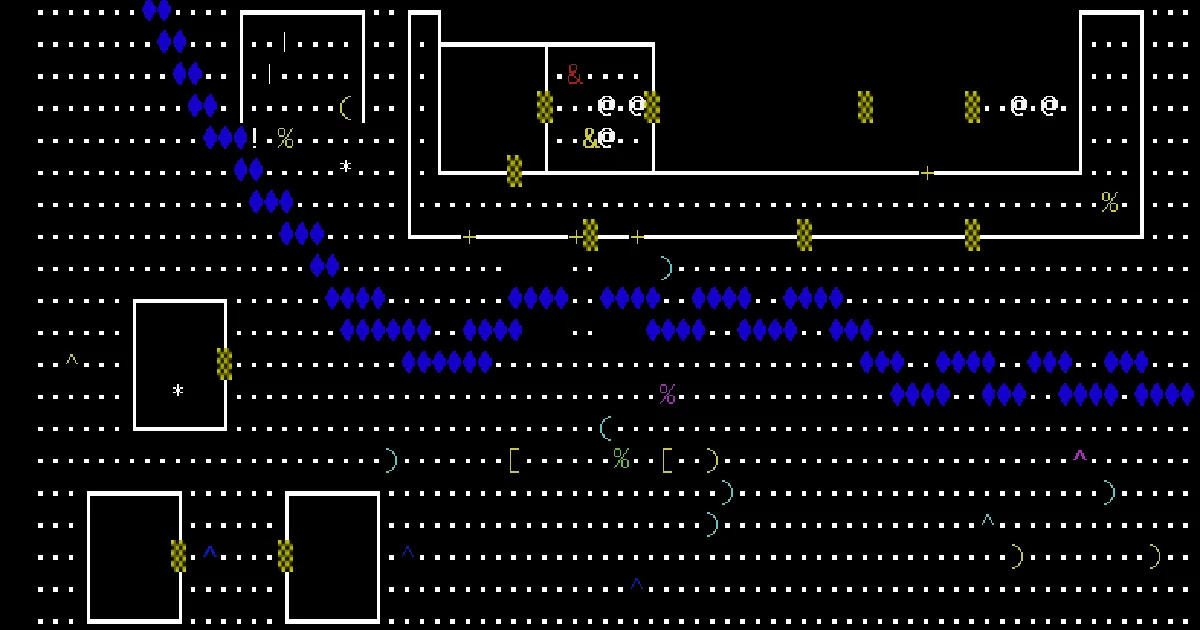
NetHack's ASCII interface — the '@' is you. Color health bar at the bottom is new in 5.0.0.
The tutorial is new. NetHack never had one. Previously, new players were expected to learn from the community wiki (the spoiler repository at nethack.org/wiki), repeated death, or the help text buried in the interface. The 5.0.0 tutorial handles the interface layer — commands, movement, item interaction. It doesn't explain identification, prayer mechanics, or the endgame. For a game where dying to the letter 'd' (a dog, or a demon, depending on depth) without knowing why is a rite of passage, the tutorial only takes the edge off the very first barrier.
GODEEPER: For the full list of changes in 5.0.0 including the balance notes and build system overhaul. NetHack 5.0.0 Release — What Changed →
New player features in 5.0.0
The built-in tutorial
Run through it. It covers keyboard commands, how to move on the ASCII grid, picking up and dropping items, and reading the status line. If you've played any version of NetHack before, skip it. If this is your first time in the dungeon, the tutorial buys you the first thirty seconds of not staring at an '@' symbol wondering what to press.
The tutorial doesn't simulate a real dungeon run. It teaches the controls, not the game.
Color-coded health indicators
In 3.6.x, the HP display was a number. In 5.0.0, the status bar uses color to indicate health state: green at high HP, yellow as health deteriorates, red when critical. The monster HP display uses the same system. For players juggling a crowded dungeon, not having to parse raw numbers against your max HP mid-fight is a real improvement.
Dangerous action confirmation prompts
Actions that have a high chance of killing you now trigger a confirmation. Eating food that might be cursed, drinking from a fountain in a bad situation, attempting to cross a moat with no water-walking. The game asks: "are you sure?" You can still do the dangerous thing. It just gives you a moment to reconsider.
Automatic door opening
You no longer have to manually open doors. Moving into a closed door opens it. This is a small change and a significant one — in 3.6.x, forgetting to open a door before moving into it was a disruption to combat flow that cost real-time. Gone in 5.0.0.
Starting class selection after the balance changes
The Valkyrie was historically the easiest path to ascension in NetHack. High starting HP, decent equipment, a pet that actually fights with you, and relatively forgiving alignment requirements made Valkyrie the standard recommendation for new players for decades. The 5.0.0 balance changes nerfed the class, though the DevTeam hasn't published specific numbers on what changed exactly.
NetHack also supports graphical tile mode — most experienced players stay with ASCII, but tiles exist for those who prefer them.
For new players in 5.0.0, Barbarian is now the safer starting recommendation. Barbarian brings high HP, two-handed weapon combat from the start, and no alignment restriction that gets you smited for accidental theft. The downside is limited magic access and no innate intrinsics — Barbarian is a physical class and requires finding magical support in the dungeon.
Valkyrie is still viable and the nerfs don't make the class bad. If you specifically want to play Valkyrie, it's still playable. But it's no longer the beginner-proof option it was in 3.6.x.
Monk is an interesting choice if you're patient: no weapon, no armor, but strong intrinsic abilities that compound across dungeon levels. It's harder to survive the early game but pays off. Don't start with Monk if you're new.
Tourist is the hardest starting class in the game by deliberate design. Don't start with Tourist.
Step-by-step: first dungeon survival basics
Every NetHack 5.0.0 guide gives roughly this advice. The reason it keeps getting repeated is that players consistently skip the steps that cost them the most.
Step 1 — Use the tutorial and read the command list
Before your first real dungeon run, complete the built-in tutorial. Then open the command reference (the '?' key in-game). NetHack has a lot of single-key commands and knowing even 15 of them makes the first hour substantially more survivable.
Step 2 — Pick up everything on the first level
The starting level (Dungeons of Doom, level 1) has food, weapons, armor, and scrolls scattered around. Pick it up. You'll need it. The rule about not eating random food applies later; on level 1, food scarcity is rarely the immediate concern.
Step 3 — Identify what you can
Some items are identified when you find them. Others require reading scrolls of identify, using a scroll, or taking a risk. Price identification — checking the price in a shop — is the fastest way to narrow down what potions and scrolls are. Don't eat, drink, or read unidentified items unless you have no other choice.
Step 4 — Pray when near death, not before
NetHack's prayer mechanic lets you call on your god for help. It has a cooldown and a threshold — your god is more responsive when you're in genuine danger. Don't pray because you're nervous. Pray when your HP is low and you have no other option. Save it.
Step 5 — Stairs go both ways
You can go back up. The dungeon deepens toward the Amulet of Yendor and Gehennom, but there's no one-way door. If level 3 is overwhelming you, level 1 might have items you missed. Going back up to heal and reorganize is not retreat; it's resource management.
NetHack 5.0.0 guide tips for surviving longer
Pets are valuable — don't let them die
Your starting pet (a cat or dog, depending on class) fights with you and can sniff out hidden items. Pets survive if you're careful about doors and traps. Losing your pet early removes a combat ally that has specific knowledge of dangerous items (pets will avoid mimics and certain dangerous traps that you'll blunder into).
Learn the identification system
The identification system is NetHack's deepest sub-game. Scrolls, potions, and rings are randomly assigned appearances each run. A "bubbly potion" might be healing this run and confusion in the next. Learning the system — price identification, apply testing, blessed/uncursed/cursed identification via scroll — is more important than any single item or class choice.
Inventory weight management
NetHack tracks encumbrance. Carrying too much slows you down, which changes combat dynamics significantly. Drop items you can't use. Don't hoard armor you can't wear yet. The dungeon gives you more than you can carry; prioritize ruthlessly.
The Valkyrie change and unicorn horn change
If you're returning from 3.6.x with established play patterns: Valkyrie is weaker than you remember and unicorn horns don't restore attributes anymore. The horn still removes status effects (blindness, etc.) but the attribute restoration functionality is gone. If you had a strategy built on horns for attribute recovery, you'll need to adjust.
GODEEPER: If the roguelite genre interests you beyond classic roguelikes, Murim Survival's mastery system adds a different kind of depth. Murim Survival Tips Guide →
What 3.6.x players need to know
The practical list of changes that affect established play patterns:
Unicorn horns no longer restore attributes. A previously reliable recovery tool is gone. If your strategy depended on horn-based attribute restoration after stat drain encounters, find alternatives: potions of restore ability, prayer at the right time, or avoidance.
Save files don't carry. Any active game from 3.6.x is gone. Bones files from the old version — the files that let other players encounter the ghost of your character — are also incompatible. You're starting fresh in a new dungeon generation.
Valkyrie is nerfed. The specific changes aren't itemized in the public patch notes beyond "balance changes include the Valkyrie class." The community is still mapping the full scope. If you played Valkyrie exclusively, expect the early game to feel harder than you remember.
The Lua build system is new. If you compile NetHack from source, the old yacc/lex-based build is replaced with Lua scripts. Community forks and variations based on 3.6.x will need to adapt.
Common mistakes
Skipping the tutorial because you've "played roguelikes before"
NetHack's interface is specific and its commands don't map to any other game's conventions. The tutorial teaches the specific controls you need. Spend ten minutes on it.
Eating random food immediately
Some foods in NetHack are dangerous. Corpses from certain monsters cause attribute damage, confusion, or worse. Learn the safe foods (basic rations, lembas, most fruits) before eating dungeon corpses.
Using a scroll in a dark room
Many scrolls trigger loud effects that attract monsters. Reading unknown scrolls in open areas with escape routes beats reading them in a corner. If you're surrounded, an unknown scroll is a gamble.
Forgetting you can go back upstairs
New players often push deeper when the dungeon is winning. The stairs at level 1 still exist. Going back up to heal and restock before returning deeper is correct play, not defeat.
Frequently asked questions
What changed in NetHack 5.0.0 from 3.6.x? NetHack 5.0.0 (released May 2, 2026) adds a built-in tutorial, automatic door opening, dangerous action confirmation prompts, and color-coded health indicators. Balance changes include a Valkyrie nerf and unicorn horns no longer restoring drained attributes. Save files from 3.6.x are incompatible — players start fresh.
Is NetHack 5.0.0 free? Yes. NetHack 5.0.0 is free and open-source. It's available for download from nethack.org and maintained by the NetHack DevTeam, a volunteer group. There's no cost to download or play.
What is the best starting class in NetHack 5.0.0? With the Valkyrie nerfed in 5.0.0, Barbarian is the safer starting class for new players. High starting HP and straightforward offense make the first dungeon levels more survivable. Valkyrie was historically the easiest path to ascension; that has shifted with the balance changes.
How does the NetHack 5.0.0 tutorial work? The built-in tutorial teaches the interface — keyboard commands, picking up items, attacking, and reading status indicators. It doesn't simplify the game's difficulty or explain advanced mechanics. Run through it if you're new, then expect to die many times in the actual dungeon.
Are save files from NetHack 3.6.x compatible with 5.0.0? No. Save files and bones files from 3.6.x are incompatible with 5.0.0 due to internal architecture changes. Any active game from the old version cannot be continued.
What are color-coded health indicators in NetHack 5.0.0? The HP display uses color to indicate health state — green at high HP, yellow as health deteriorates, red when critical. Monster health uses the same system. This is a usability improvement over the raw number display in 3.6.x.
What happened to unicorn horns in NetHack 5.0.0? Unicorn horns no longer restore drained attributes. In 3.6.x, they were a reliable attribute recovery tool. In 5.0.0, horns still remove status effects but the attribute restoration function is gone.
References
- NetHack 5.0.0 at nethack.org — official download, source code, and release information for all platforms
- NetHack Community Wiki — spoiler wiki maintained by the NetHack community, covers identification tables, strategy, and class guides for all versions
Related reading
The NetHack 5.0.0 release article covers the full scope of changes in this version — the build system overhaul, change log scope, and what the DevTeam published about the balance decisions.
The Murim Survival tips guide is relevant if you're interested in roguelites with a persistent mastery system rather than the pure-roguelike structure of NetHack. Different traditions, useful to know both.
If you want a dungeon game with a steeper entry curve than NetHack's tutorial offers, the Die in the Dungeon tips guide covers a card-based dungeon crawler with its own set of identification and build puzzles — a shorter playtime but a similarly unforgiving loop.
Was this guide helpful?
About the author

Critical game theorist with a background in film criticism. Writing for print and digital outlets since 2015. Specialises in genre analysis and design heritage.
- Background in film criticism
- 10 years games coverage
- Genre theory and design history specialist



Disclaimer
This article is published for informational and entertainment purposes. It does not constitute professional financial, legal, or technical advice. Game performance, online services, patch schedules, and store listings change. Verify critical details (pricing, system requirements, regional availability) with publishers and storefronts before you buy. Affiliate links, where present, help support our editorial work and are labelled in our affiliate disclosure.