Loading…
GameBrief · Guides
Outbound Best Base Locations: Where to Park Your Van
7 min readBy Finn Calloway
Reviewing
Outbound
Square Glade Games · Silver Lining International
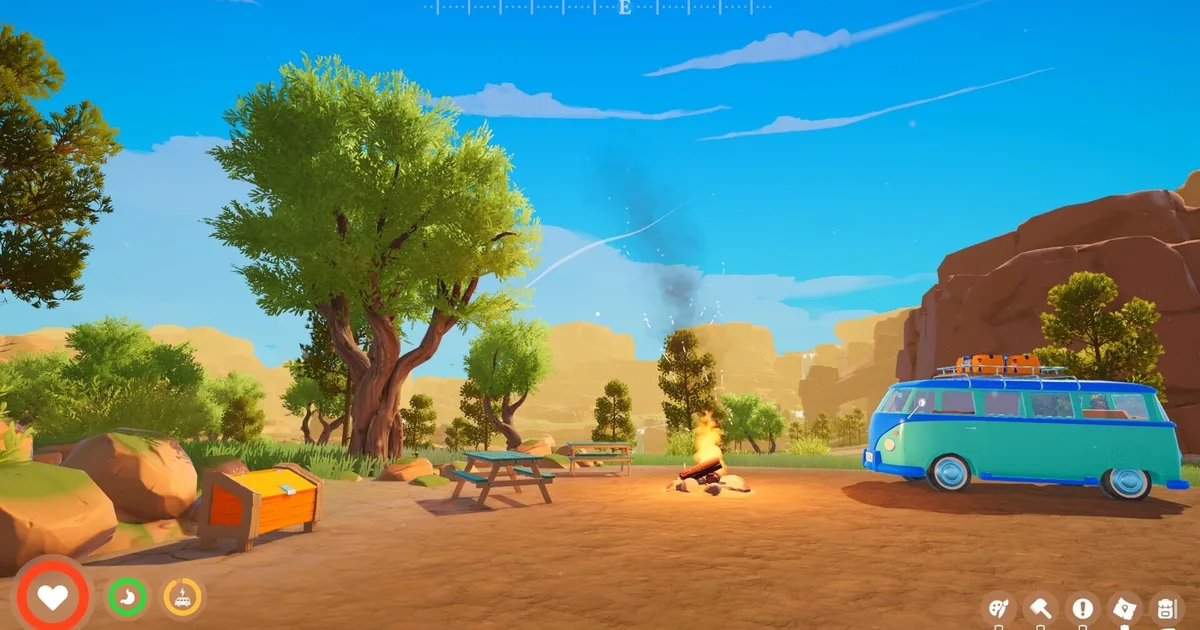
The outbound best base locations question isn't about scenery. Where you park your van carries more mechanical weight than any single upgrade you'll buy in the first four hours. The van is the base. Location is the build decision.
These aren't tips about finding a nice view. Each one changes what energy sources work, what resources you can farm without moving, and — in co-op — how efficiently your group runs on the same power budget.
TL;DR: Plains for wind power. Coast for balanced solar plus material access. Forest for resources when your power situation is already solved. Check signal towers before you park anywhere new.
Key Takeaways
- Plains biomes give the best wind turbine output — open terrain has no obstructions cutting your generation
- Coastal areas balance solar exposure and shoreline resource access, making them the best general-purpose early-game spot
- Forests are resource-dense but shade your solar panels, making them inefficient until you've sorted your energy
- Signal towers offer blueprint choices that shape your next build direction — visit them before committing to a spot
- In 4-player co-op, a centrally parked van lets gatherers split across adjacent terrain without hiking back constantly
Overview
Outbound launched May 11, 2026 on PC and Xbox Series X|S, with PS5 and Switch following May 14. Square Glade Games' co-op adventure puts 1 to 4 players in a shared electric camper van that doubles as your mobile workshop, kitchen, sleeping quarters, and battery bank.
These tips run from hour one through mid-game. Late game, once you've got enough energy redundancy, the biome penalty math matters less. Until then, where you park decides your energy budget, what you can farm, and how fast you can build.
Not about scenic. About where the numbers work.
Tips for finding the outbound best base locations
Step-by-step: read the terrain before you commit
Driving around is free. Pulling a module off the van and losing resources is not. Before you park for a session, take two minutes to scout on foot or from a high vantage point.
Look for: open sky (solar and wind), moving water (water wheels), dense resource clusters (gathering efficiency). The best outbound base locations balance at least two of these. No single spot ticks all three — that's the design. The plains give wind but thin resources. Forests give resources but block sun. Coasts split the difference without excelling at either.
Plains and open fields — best for wind turbine builds
Wind turbines produce noticeably more power in unobstructed flat terrain than in forested or sheltered areas — the output difference is significant enough to matter for your energy budget. If you've unlocked a turbine and want to run it at full output, plains are where it earns its van weight. The trade-off is lower resource density — you'll be driving further to gather compared to forest camps.
One specific advantage of plains parking: solar panels still work in open terrain. If you run both solar and wind (which you should, mid-game), plains give you a two-source setup without compromise. Coastal biomes are the only rival for two-source efficiency.
Coastal and shoreline — the best all-around early-game location
For players in the first six hours, coastal spots are the most forgiving of the outbound best base locations. Solar runs at full efficiency — no canopy cutting it. Shoreline materials appear at the waterline, so you're farming within walking distance of the van. Energy stays stable. Gathering loops stay short.
The coastal zone also has enough wind exposure in open sections to run a turbine without major output loss, though it's not as good as a true plains position. Think of it as plains-level solar plus material nodes, with slightly lower wind output.
For co-op groups, coastal parking is particularly strong. One or two players can farm the shoreline while another monitors the van's battery. Nobody has to hike far. The shared power budget stays healthy because solar keeps baseline operations running across daylight hours.
Coastal parking: solar runs at full capacity while two players farm the shoreline. This is the default early-game setup for most co-op groups.
GODEEPER: Managing your van's power across different biomes connects directly to your co-op role assignments. Outbound Co-op Guide: Roles, Energy, and Van Builds →
Forest and dense vegetation — resource-rich, energy-punishing
Forest zones contain more raw materials per square area than plains or coasts. The catch: dense canopy cuts solar panel output meaningfully. A solar setup that keeps you comfortable in coastal terrain will leave you draining battery in a deep forest camp.
Forests become viable base locations once you have a water wheel running or your solar capacity has been upgraded to compensate for the shade penalty. Parking in a forest before solving your energy problem is a good way to run out of power mid-session and have to relocate anyway.
That said, a targeted forest stop — drive in, park near a resource cluster, gather aggressively, drive out before dark — is a legitimate mid-game pattern. You don't have to sleep there to use the resources.
Water source proximity — the conditional pickup
Water wheels are the highest raw output of the three energy sources when positioned correctly, running day and night regardless of cloud cover. The problem is they require fast-moving water, and ideal crafting spots aren't always next to rivers.
If you've scouted a river with strong current in a coastal or plains-adjacent area, that's close to an ideal outbound base location: water wheel for overnight power, solar or wind as a daytime supplement. The catch is that committing to a riverbank spot locks your van to that terrain. Worth it in mid-game when you've explored enough to know the area's resource density.
Outbound best base locations: advanced tips
Signal tower blueprint choices are permanent and randomized per session. Check the tower before building — this screen shapes what you construct next.
Check signal towers before you park. Every biome has them, and activating one shows you blueprint options — you pick one, it's yours permanently. The problem is the selection is random per session, so if you park and start building before checking the tower, you're likely building toward components the tower would have redirected. Towers first. Settling in second. Getting this backwards is the most consistent sequencing mistake I see in Outbound's early hours.
The van's position isn't permanent. It's tempting to plant early and commit. Relocating mid-session to a better spot you found while gathering is completely valid, though. The van drives. Use it. Staying somewhere suboptimal because moving feels like admitting a mistake is the wrong call. Your early camps will be messier than your later ones. That's fine.
Co-op location splits. With four players, the van doesn't need to be perfectly central to all gathering zones. Position it near the highest-priority resource cluster or the strongest energy position, then split gatherers. Two players work adjacent zones while two stay closer to the van. Communication about where everyone is gathering prevents three players from farming the same nodes.
For more on splitting gathering tasks effectively with a full group, see the Outbound tips guide covering van setup and energy sequencing.
Read the weather before committing to wind. Outbound's weather affects turbine output — park in open plains for wind and you're making the right call in principle, but a zone with consistently calm weather cuts that advantage. The game doesn't explain this clearly. You'll notice your turbine output varying before you work out why.
If you want to see how these systems hold up across a full run, the Outbound review covers progression and co-op design in detail.
GODEEPER: Before you build out a specific biome setup, confirm your energy priority with the signal towers — the randomized blueprint options shape what's worth building toward. Outbound Tips: First Hours, Van Setup, and Energy Guide →
Frequently Asked Questions
What are the best base locations in Outbound?
For energy efficiency, plains biomes are best for wind turbine output. Coastal areas balance solar and material access well. Forests provide resource density but penalize solar generation. The outbound best base locations vary depending on your energy setup and what resources you need to farm next.
Can you build a permanent base in Outbound?
No. Your van is the only base — you park it, expand it, and move it when you're ready to explore a new region. There's no foundation-placing or fixed structure building. Location choice is about parking your van where it gives you the best energy and resource access for the session.
Does biome type affect energy generation in Outbound?
Yes, significantly. Wind turbines perform well in open plains and poorly in forested terrain. Solar panels are biome-agnostic for sunlight but underperform when forest canopy blocks exposure. Coastal biomes split the difference. Water wheels need fast-moving water regardless of biome.
Should you visit signal towers before parking your van?
Yes — always visit signal towers before committing to a camp spot in a new biome. Towers offer blueprint choices that determine what you build next. Park and build before checking the tower and you might invest in a direction the tower would have redirected.
How does co-op change base location decisions in Outbound?
With 4 players, base location decisions carry more weight because multiple players draw power from the same battery. Coastal biomes are often the best co-op starting spot — solar keeps baseline operations running while two or three players gather materials from nearby nodes.
What resources are unique to coastal areas in Outbound?
Coastal zones give access to shoreline-specific materials not found inland. Combined with solid solar exposure, this makes them one of the more efficient early-to-mid game biomes — you can run operations and gather simultaneously without relocating.
Is forest camping ever worth it in Outbound?
Yes, but only if you've already built out solar sufficiently or have a water wheel running. Forest terrain trades energy efficiency for resource density. Mid-game with reliable power, parking in a forest for a dedicated resource session makes sense. Early on, avoid forests unless you're there for a specific resource node.
References
- Outbound on Steam — store page, system requirements, current pricing
- Square Glade Games official site — developer blog and update announcements
- Outbound complete guide hub — van builds, base locations, energy, co-op, and survival tips
Was this guide helpful?
About the author

Games Critic
Games writer and reluctant optimist who has reviewed over 400 titles across 9 years. Irish, currently in Berlin. Has strong opinions about tutorial design.
- 400+ games reviewed across 9 years
- Platformer and horror specialist
- Narrative design focus


Disclaimer
This article is published for informational and entertainment purposes. It does not constitute professional financial, legal, or technical advice. Game performance, online services, patch schedules, and store listings change. Verify critical details (pricing, system requirements, regional availability) with publishers and storefronts before you buy. Affiliate links, where present, help support our editorial work and are labelled in our affiliate disclosure.