Loading…
GameBrief · General
TetherGeist Complete Guide: Azae, Tips & Walkthrough
10 min readBy Priya Nair
Reviewing
TetherGeist
O. & Co. Games
This tethergeist complete guide covers every major system: Azae mechanics, screen progression, checkpoint strategy, the mushroom problem. The goal is to get you oriented before you lose hours to a mental model that's slightly wrong.
TetherGeist Complete Guide: Key Takeaways
- TetherGeist is a combat-free precision platformer built entirely around the Azae system: seven items that change how Mae's spirit Bao interacts with the world
- Each Azae changes movement logic from the ground up, not just speed or range — you're relearning geometry with every new chapter
- The mushroom-power Azae is where most players stall; the fix is reading backward from the exit, not retrying the same angle
- Ball-banking Azae rewards players who trace the full bounce path before committing
- Dense checkpoints and instant retries make failure informative rather than punishing
- The game runs 6–10 hours depending on how fast geometric angle-reading clicks for you
Overview: What TetherGeist Is and Who It's For
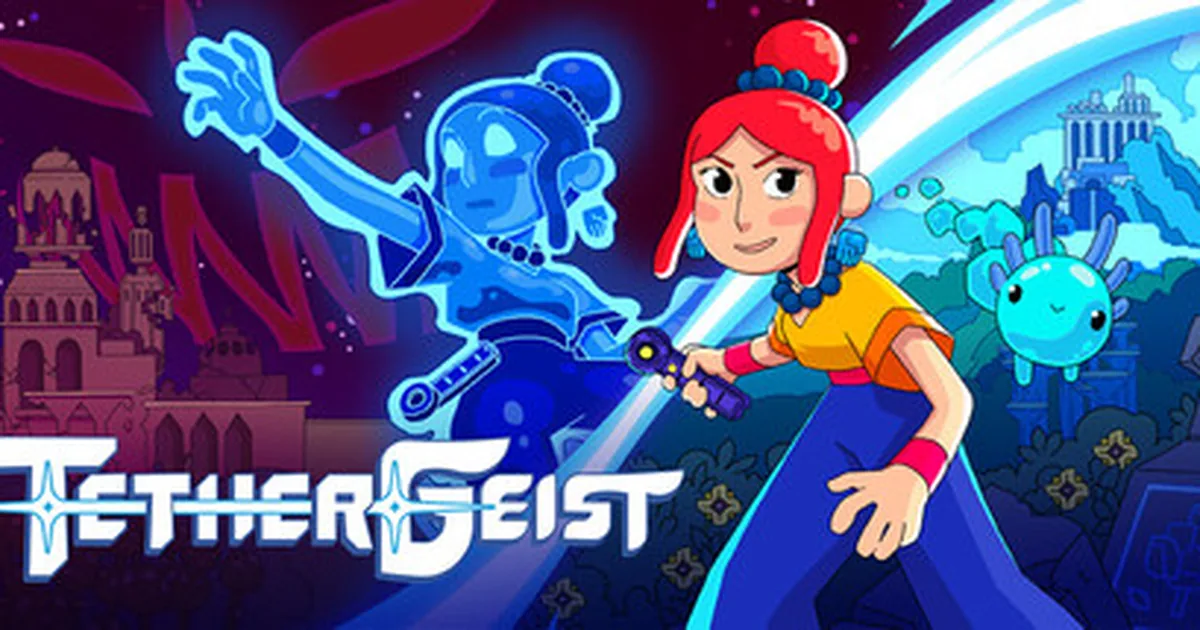
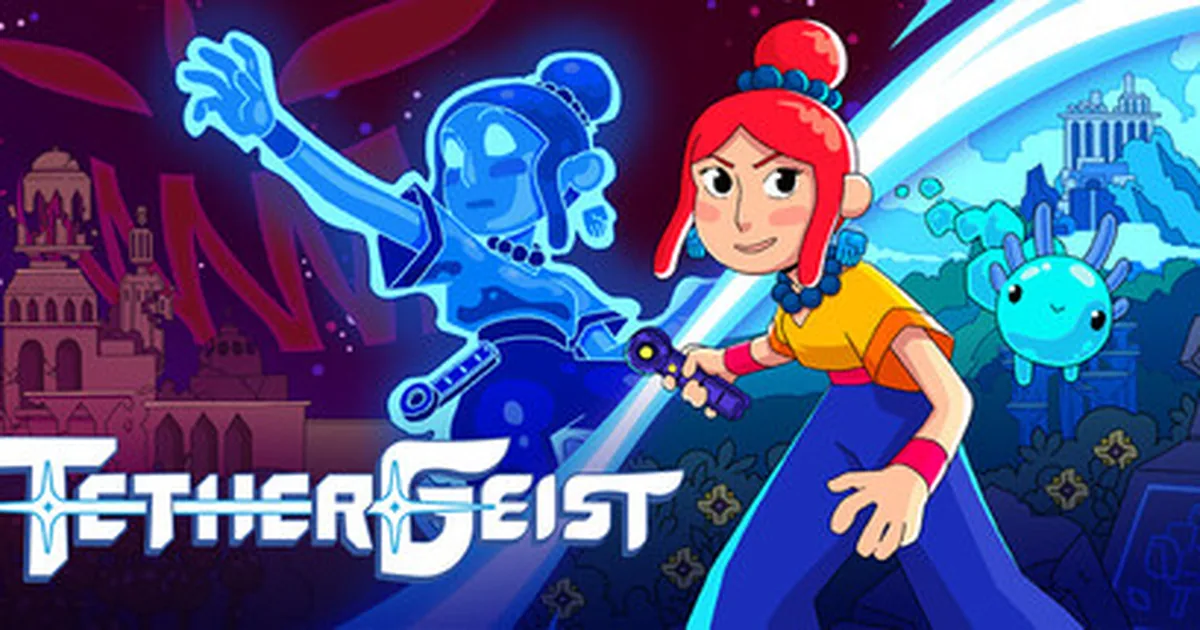
TetherGeist follows Mae, a young villager with a motor disability and chronic illness who undertakes a once-in-a-lifetime pilgrimage with Bao — an axolotl spirit bound to her through Astral Projection. The tether connecting Mae to Bao is the game's entire mechanical language. There's no combat, no upgrade tree, no inventory to manage. You move through the world by projecting Bao into it, then interacting with whatever Bao touches.
That framing matters for setting expectations. This isn't a platformer that asks you to get faster. It's a platformer that asks you to think differently about space and geometry each time a new Azae enters your toolkit. Players who enjoy Celeste-style difficulty but found the movement vocabulary too narrow will find TetherGeist a different kind of satisfying.
O. & Co. Games is a debut studio. TetherGeist was funded on Kickstarter (500 backers, $21,445 raised) and earned a BIG Festival finalist nod in four categories before the May 7, 2026 launch: Best Game, Best Art, Best Sound, and Best Impact. The pre-launch Steam demo pulled 98% positive from 74 reviews. That's a lot of goodwill to build before a game ships.
For a full critical take on narrative, atmosphere, and where the design stumbles, see the TetherGeist review. This guide is focused on play.
The Azae System Explained
The Azae are the core of this tethergeist complete guide, because understanding them is understanding the game.
Mae carries one Azae item at a time. The item determines how Bao behaves when projected. Seven Azae appear across the game's chapters, each introduced with at least one tutorial-adjacent screen before the difficulty climbs. They don't function as power upgrades — you don't get a stronger version of the previous Azae. Each one is a different mechanic with different rules.
The projection Azae (first) is the genre baseline: extend Bao a fixed distance, teleport to where Bao lands. Range is fixed. Collision is simple. These early screens are teaching you that TetherGeist is a geometry game, not a reflex game.
The ball-banking Azae is where the game earns its identity. Bao fires outward in a straight line, banks off walls at the angle of incidence, and passes through thorny obstacles that would kill Mae on contact. You're no longer aiming at a landing point. You're calculating where Bao will be after one or two bounces. Screens using this Azae reward players who trace the path first:
- Find your exit point
- Which wall does Bao need to bounce off to reach it?
- What firing angle from Mae hits that wall correctly?
- Execute once, note how far off Bao landed, correct the delta
Players who throw and retry fast on ball-banking screens typically take longer than players who spend 30 seconds reading before attempting.
The mushroom-power Azae bounces Mae toward or away from floating mushrooms based on approach angle. No mid-air correction after you commit. The angle read happens before you leave the ground. This is the game's hardest ask, and the one most guides gloss over. More on it in the section below.
The tether mid-extension — every Azae variant starts from this moment of projection and diverges from there.
Later Azae combine these interaction rules with environmental hazards that affect Bao differently depending on which ability is active. A surface that was safe for ball-Bao may stop the projection Azae entirely. When something unexpected happens, figure out whether the surface is interacting with Bao, with Mae, or both. That distinction usually explains what happened.
GODEEPER: For a deeper critical breakdown of how each Azae region is structured — including where the difficulty curve spikes and what the mushroom Azae gets wrong about feedback — the review covers this in full. TetherGeist Review: Precision Platforming Worth the Pain →
Screen Difficulty and Progression
Each chapter introduces a new Azae, spends 10–20 screens building complexity around it, then hands off to the next. The first screen using a new Azae is always the most forgiving version. The last screens before the next chapter are the hardest configuration of that same Azae.
That structure has one consequence worth naming: if you scraped through a screen on a lucky attempt without understanding what worked, the harder version three screens later is going to feel arbitrary. It isn't. You just didn't learn the mechanic when the game gave you room to.
Screens are bite-sized, rarely more than 30 seconds of active movement. You're not clearing a long gauntlet. You're solving small spatial puzzles, one rule at a time. The 6–10 hour runtime comes from how long each Azae takes to internalize, not from level length.
Checkpoints appear within levels, not just between them. Retries are instant: no loading screen, no timer. O. & Co. Games made the same call Celeste did, and it's the right one. Failure costs seconds. You attempt, you observe, you revise. The loop is tight enough that a bad run doesn't feel like wasted time.
Step-by-Step: How to Approach TetherGeist's Learning Curve
Step 1: Accept that each Azae resets the clock. Your intuition from the previous chapter doesn't fully transfer. Treat each new Azae introduction as a fresh start. The tutorial screen is worth more attention than it seems.
Step 2: Read before throwing. Before attempting any screen, answer three questions: Where is the exit? What's between Mae and that exit? How does the current Azae interact with those obstacles? Players who map the answer first are faster than players who attempt-observe-attempt their way through. This is the single biggest habit shift the game rewards.
Step 3: Ball-banking screens. Find your exit. Trace backward to identify the bounce surface Bao needs to hit. Calculate the firing angle from Mae to reach that surface. Attempt once, note how far off Bao landed, correct the delta. Do not repeat the same angle twice — the physics are deterministic.
Step 4: Mushroom Azae screens. Identify the last mushroom in the chain: the one that puts you at the exit. Is this a "toward" deflection (approaching from the far side) or "away" (approaching from the near side)? Label it, then trace backward to the preceding mushroom. Your first attempt is diagnostic. Note where you went, not whether you passed.
Step 5: Two-attempt rule. If you've failed the same screen twice using the same approach, the problem isn't execution. You're working from a wrong model. Look at the screen from scratch. Is there an exit route you haven't tried? A surface that might behave differently than assumed?
Step 6: Replay screens you barely passed. Can you explain what worked? If not, a second deliberate run takes 30 seconds and saves 20 minutes on the harder version later in the chapter. This sounds slow. It's faster.
Step 7: Test surface interactions in later chapters. Some surfaces change behavior depending on which Azae is active. When something unexpected happens, the cost of testing it is one retry. Don't assume a surface behaves the same way it did two chapters ago.
Checkpoint placement within screens — the game's primary difficulty tool. Dense mid-level checkpoints mean each retry covers only the last few moves, not the whole screen.
GODEEPER: If the geometric thinking TetherGeist demands interests you in another 2026 game, the Kristala combat guide covers precise timing mechanics with similar emphasis on reading the system before committing. Kristala Combat Guide — Parry Timing and Mana Loop Tips →
TetherGeist Complete Guide: Tips and Techniques
Checkpoint density is easy to miss on a first pass. If a screen has been killing you from the same position repeatedly, check whether there's a mid-screen checkpoint you haven't reached yet. Getting to that checkpoint changes the retry cost from "the whole screen" to "the last few moves." That's a significant difference.
Elevation affects the mushroom Azae in a way the game doesn't explicitly tell you. Approaching a mushroom from below versus from the side produces different trajectories at the same approach angle. When a mushroom screen feels inconsistent, check your elevation on each attempt before assuming the angle itself is wrong.
Bao passes through thorns. Mae does not. On ball-banking screens that mix thorns into the layout, the intended path often sends Bao through patches Mae can't touch. Don't try to follow Bao through thorns — find a path for Mae that keeps her out of them while Bao does the work.
TetherGeist revisits earlier regions with new Azae equipped. An obstacle that blocked you before may now be a surface you can use. Areas you've already cleared can open up new routes when you return with a different Azae active. It's not backtracking for collectibles. The space genuinely changes.
Each failed retry tells you something: where Bao actually went, how Mae moved relative to the mushroom, which obstacle stopped the projection. If you're not pulling that information out of each attempt, you're not using the checkpoint system for what it's designed for.
One last thing: TetherGeist doesn't pad. There are no filler screens between mechanical introductions. If a screen feels random or pointless, you're probably missing an interaction the game is quietly teaching. Slow down more than you think you need to.
For a more detailed breakdown of each Azae mechanic and chapter-by-chapter tips, see the TetherGeist tips guide. That article covers mushroom angle calibration and ball-banking in more detail than this hub has space for.
If you're tracking story-rich precision platformers in 2026, see our Alabaster Dawn early access coverage for another debut worth knowing about.
Frequently Asked Questions
What is TetherGeist and who is it for? TetherGeist is a combat-free precision platformer by O. & Co. Games, out May 7, 2026 on Steam (PC) and Nintendo Switch. It's built entirely around the Azae system — a spiritual tether that changes movement rules with every new ability. It suits players who enjoy geometry-based movement puzzles over reflex-based challenges.
How many Azae are in TetherGeist? Seven. Each one fundamentally changes how Mae's axolotl spirit Bao interacts with the world. Earlier Azae can feel different when you return to a region with a newer one equipped.
What is the hardest Azae in TetherGeist? The mushroom-power Azae, for most players. It bounces Mae toward or away from floating mushrooms based on exact approach angle, with no mid-air correction and minimal feedback on how far off the angle was. Working backwards from your exit is the most reliable way to break through these screens.
Does TetherGeist have an easy mode or accessibility options? No traditional easy mode, but the game uses dense in-level checkpoints and instant retries. Six languages with full subtitles. No assist mode equivalent to Celeste's — checkpoints are the primary tool.
How long is TetherGeist? A first playthrough runs 6–10 hours. Players who find angle-based geometry intuitive finish toward the low end; those who struggle with mushroom Azae sections or ball-banking puzzles can expect closer to 10 hours.
Is TetherGeist similar to Celeste? Both are hard precision platformers with story-rich narratives and failure-as-learning philosophy. Celeste builds muscle memory through repetition; TetherGeist changes the movement rules per chapter so you're constantly relearning. Some players find TetherGeist mentally harder even on shorter screens.
What platforms is TetherGeist on? Steam (PC) and Nintendo Switch, launched May 7, 2026. The Switch version is also compatible with Nintendo Switch 2.
How much does TetherGeist cost? Pricing was announced in the Celeste/Hollow Knight range (~$15–$20). Check the TetherGeist Steam page for current pricing.
References
- TetherGeist on Steam — official store page, pricing, reviews
- O. & Co. Games — TetherGeist Press Kit — developer page
- TetherGeist BIG Festival Finalist Announcement — four finalist categories
- TetherGeist Kickstarter — campaign page, 500 backers, $21,445 raised
Was this guide helpful?
About the author

Indie & JRPG Critic
Indie game evangelist and lifelong JRPG fan covering small studios since 2017. Mumbai-born, London-based. Writes the way she talks.
- 7 years indie games coverage
- JRPG and visual novel specialist
- Narrative design focus


Disclaimer
This article is published for informational and entertainment purposes. It does not constitute professional financial, legal, or technical advice. Game performance, online services, patch schedules, and store listings change. Verify critical details (pricing, system requirements, regional availability) with publishers and storefronts before you buy. Affiliate links, where present, help support our editorial work and are labelled in our affiliate disclosure.