
GameBrief · General
Dark Scrolls Dungeon Guide: Routes and Shoppe 2026
Reviewing
Dark Scrolls
doinksoft · Devolver Digital
The Dark Scrolls dungeon guide you actually need starts with the route map, not an invented floor counter. doinksoft's co-op roguelike uses procedurally generated runs of hand-crafted rooms and screens, with bosses, quests, traps, and routes shaped by player choices. The official manual names three route sequences; it does not publish the old Zone 1 to Zone 5 progression that earlier coverage claimed.
TL;DR: The official manual lists three routes: Forest -> Bridge -> Mountain -> Moon; Forest -> River -> Cave -> Castle; and Forest -> River -> Cave -> Heck. The Steam page adds hand-crafted screens, unique bosses, branching/evolving routes, and quests. It does not publish a fixed floor count or a universal Zone 1 to Zone 5 difficulty script. Use the Shoppe to match perks, attacks, and summoned allies to your hero, and keep moving with the autoscroll.
Dark Scrolls dungeon guide: how zone progression actually works (quick answer)
Each run uses hand-crafted rooms assembled into a procedural route. The manual's route list is the reliable structure:
FOREST -> BRIDGE -> MOUNTAIN -> MOONFOREST -> RIVER -> CAVE -> CASTLEFOREST -> RIVER -> CAVE -> HECK
The Steam page confirms unique bosses, evolving routes shaped by choices and quests, and Bruce and Goose's Shoppe with perks, devastating attacks, and summoned allies. It does not say that every route has the same number of screens, that every named area has a fixed enemy table, or that a particular numbered zone always contains a particular unlock.
For hero-specific route decisions, cross-reference the Dark Scrolls unlock guide, the best builds guide, the co-op ghost guide, and the beginner tips guide.
Forest and the first route decision
Every manual-listed route begins in Forest. The practical lesson is to learn the autoscroll and the cost of drifting behind it before you optimize a build. Games.GG describes the game as an autoscrolling platformer and warns that reaching the scroll edge is lethal; that is useful player guidance, but it is not a source for a fixed Forest enemy roster.
Do not turn the opening into a fake numbered-zone checklist. Attack to charge the Star Meter, collect coins when doing so does not pull you backward, and use the first Shoppe opportunity to identify which documented perk fits your hero. The official store page confirms hand-crafted screens, deadly traps, unique bosses, and evolving routes, not a guaranteed chest or enemy at a particular screen.
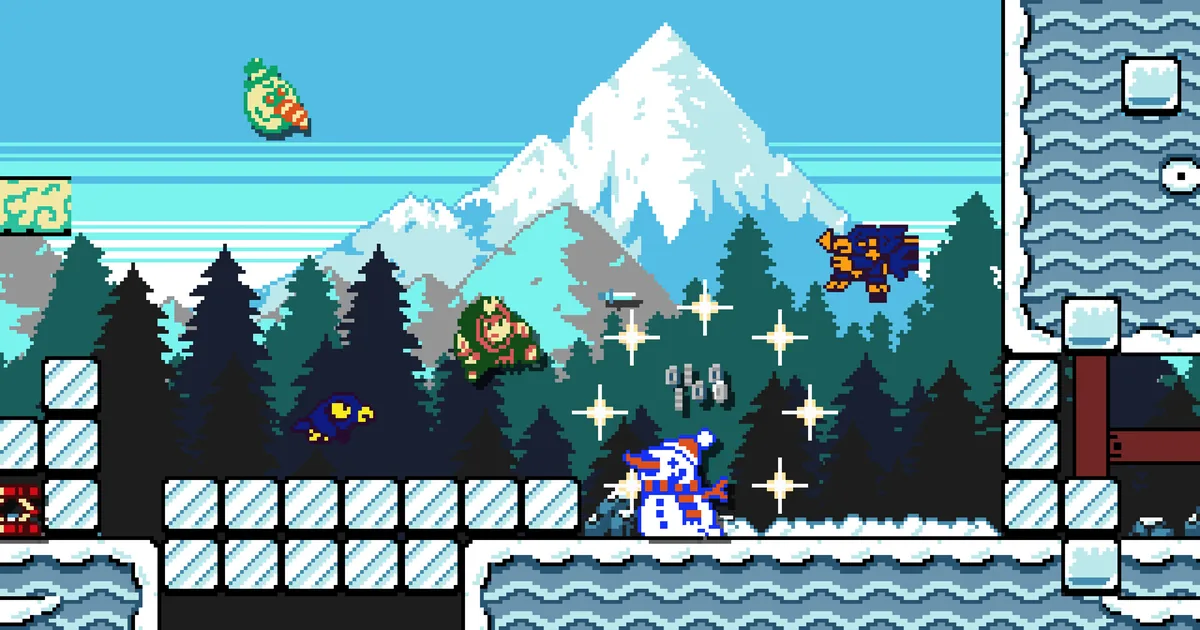
 A mid-run combat screen in one of the dungeon's forested zones. Multiple enemy types arrive simultaneously here. Scroll timing, not individual combat priority, determines whether you take chip damage through this section.
The manual says Biscuit's unlock is tied to the first boss, but it does not call that encounter "the end of Zone 2" or define a universal attack-phase count. If you are hunting Biscuit, look for the cage during that first boss rather than following an invented screen number.
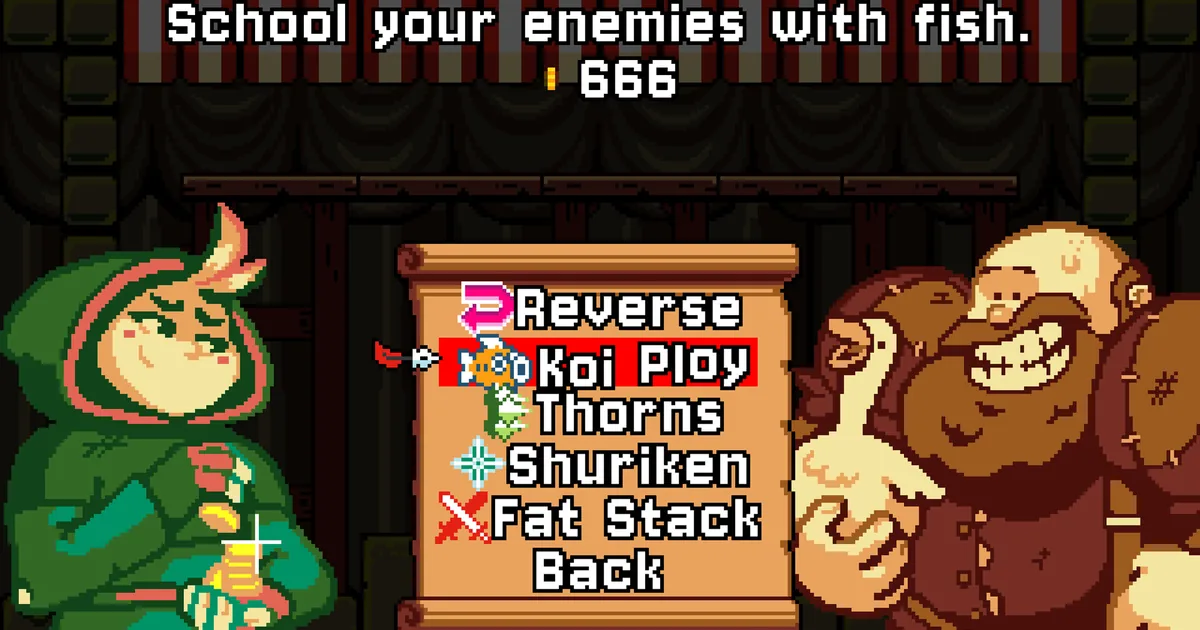
At a Shoppe visit, buy from the documented categories: perks, devastating attacks, or summoned allies. The manual defines Shuriken as spawning a bouncing shuriken when you shoot, Koi Ploy as a school of fish, and Thorns as damage draining money before health unless money is depleted. Choose based on the hero and your coin reserve; there is no authoritative rule that Thorns is contact reflection or that a specific numbered Shoppe visit is mandatory.
GODEEPER: Understanding Shoppe synergies is the layer under dungeon survival. Dark Scrolls Best Builds: All 9 Heroes Ranked →
Bridge, Mountain, River, and Cave: read the route, not a fake zone number
The manual gives two branches after Forest: Bridge -> Mountain -> Moon, or River -> Cave -> Castle/Heck. The Steam page says that routes are shaped by choices and quests, so route selection matters, but it does not support a universal promise that a branch contains a chest, a hero, or a particular enemy progression.
Use the documented specials to solve pressure on any branch. Quinn's Aura creates a healing ring and temporary fire-rate increase. Emerys's Orbitals damage enemies and destroy projectiles. Ironbeard's double-jump creates temporary platforms, while Confit's Cook can send damaging food or create hearts. These are safer guideposts than claims about "Zone 3-4" projectile density or a fixed second boss.
The unlock conditions also cross the route names in a specific way: Confit's quest begins with the cowboy computer in Mountain, the key is bought from the Perk Shop, and the rescue occurs in Castle. Ironbeard then requires throwing meat at him in Cave after Confit is free. Do not replace those steps with generic advice to search a middle-zone branch.
Bruce and Goose's Shoppe: timing your buys across the full run
The Shoppe is the run's upgrade point. The official Steam page and manual confirm three categories: perks, devastating attacks, and summoned allies. The manual gives exact descriptions for many named perks, so use those descriptions rather than inventing a generic modifier.
Shuriken spawns a bouncing shuriken when you shoot. Koi Ploy summons a school of fish. Fat Stack increases damage by 1x the number of active perks, including itself. Thorns and Paywall are described as draining money instead of health unless money is depleted. The manual does not define Reverse, so this guide leaves its effect unassigned.
The buying pattern that works across a full run:
First Shoppe visit: One perk that stacks directly with your documented hero kit. Skip everything else if the effect is not clear. Committing early to one direction matters more than keeping options open.
Later Shoppe visit: A second perk in the same direction, if its effect is documented and available. If the fit is unclear, a summoned ally is the safer general option because the Steam page describes allies as part of the Shoppe's inventory.
Before a difficult route segment or boss: Consider a devastating attack or summoned ally if you lack independent coverage. The sources do not give a universal "Zone 5+" purchase rule, so spend according to the route and current kit.
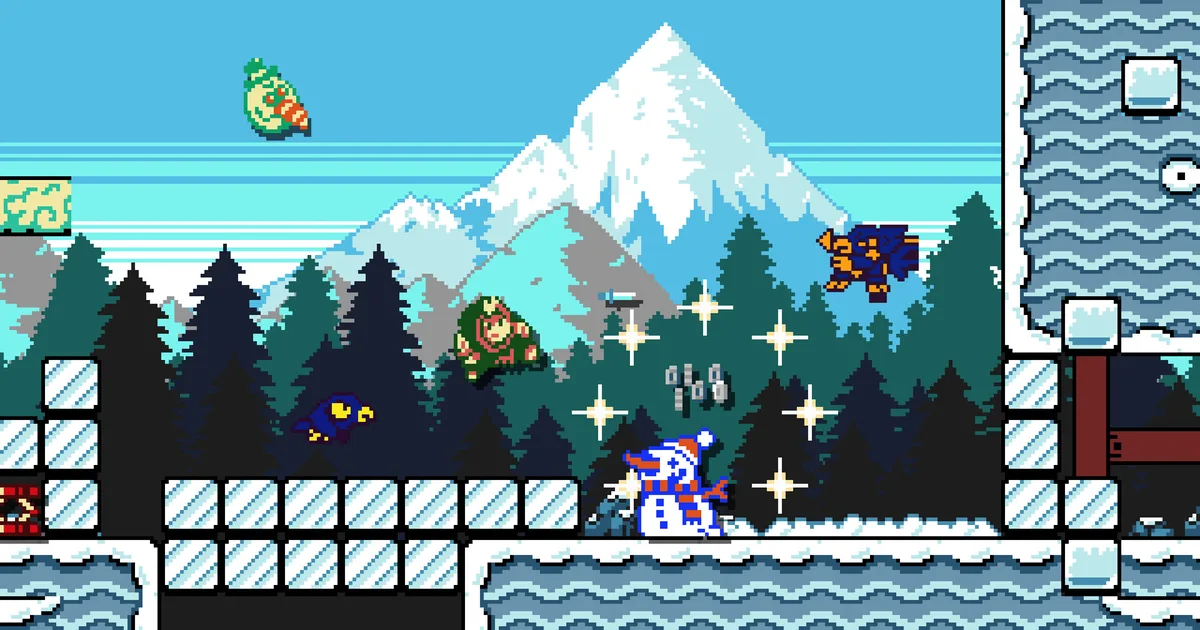
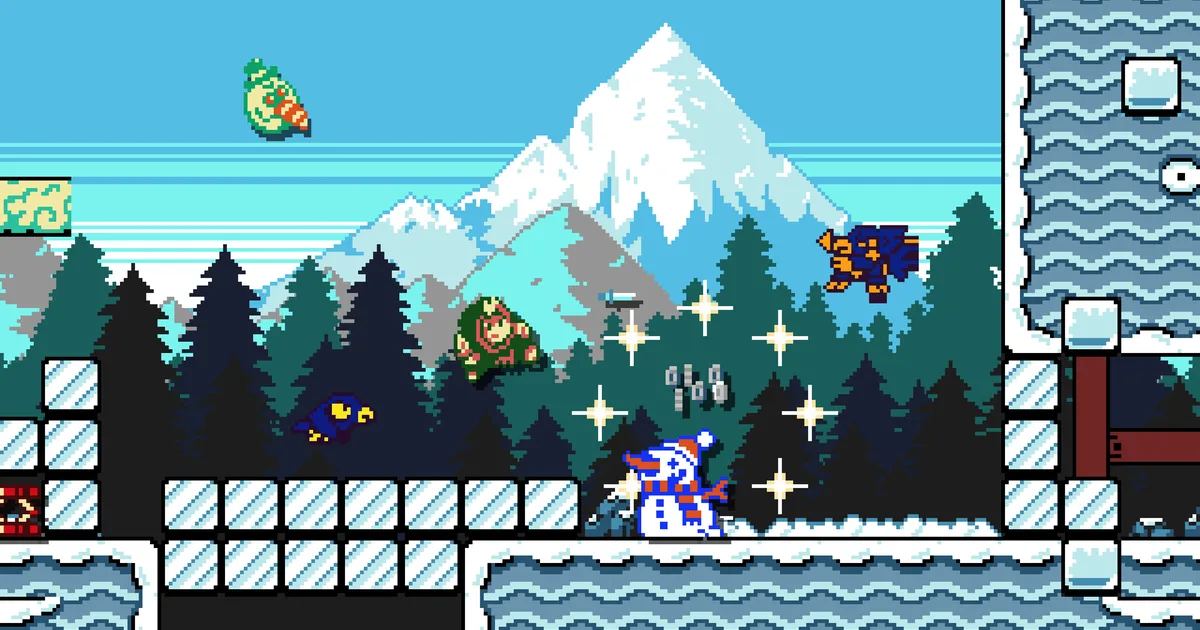
 A set-piece stage segment in Dark Scrolls. This particular screen isn't the Shoppe menu itself, but it shows the game's visual range beyond the scrolling dungeon zones. Whichever screen you're on, the same rule holds: pick one Shoppe direction and stack it, the perk that best amplifies what your hero already does, not the one that sounds most powerful in isolation.
Nezumi has a separate song system. The manual specifies 1 = UP, 0 = FORWARD, and 2 = DOWN; the sax stores up to five notes, double-jumping sends those notes as homing projectiles and clears the sax, and Perform attempts a song. A valid song triggers its associated named effect for both players. The manual lists multiple named effects but does not establish a fixed 16-plus total or a coin-saving ranking against every other hero.
In co-op, the Steam page confirms that players can revive one another after a fall. Games.GG reports Shoppe/checkpoint recovery for its ghost system, but that is a third-party observation rather than a manual-listed economy formula. Keep some coins in reserve if a partner is down, without promising that a revive appears at every named route point.
Surviving the deeper route segments
The official sources do not give a fixed later-zone speed formula or a universal enemy-density table. Games.GG does confirm the practical autoscroll threat: the screen edge can kill you. Keep moving forward, do not backtrack for a low-value pickup, and use the Shoppe to cover the weakness your chosen route exposes.
Quinn's Aura creates a healing ring and temporary fire-rate increase. Emerys's Orbitals damage enemies and destroy projectiles. Ironbeard's double-jump creates temporary platforms. Saturn flies and uses Abduct to pull in enemies, coins, and props. These are concrete late-run considerations, but they are not proof that a particular route contains a fixed sixth screen, a second boss phase, or a prescribed perk count.
In co-op, the Steam page confirms local and online play plus revives. Games.GG's ghost report supports keeping a fallen partner active as a platform and weak stagger shooter, but treat exact positioning and recovery edge cases as player guidance rather than official route rules.
GODEEPER: The 9 heroes in Dark Scrolls each handle late zones differently based on their mobility and special mechanics. Dark Scrolls Tips: 9 Things to Know Before First Run →
Step-by-step: a source-backed route run
- Start in Forest and learn the autoscroll. Attack to charge the Star Meter, and do not retreat for a pickup unless the risk is clear.
- Choose the branch presented by the run. The manual's published continuations are Bridge -> Mountain -> Moon or River -> Cave -> Castle/Heck.
- At the Shoppe, read the documented effect. Shuriken creates a bouncing shuriken, Koi Ploy creates a school of fish, and Fat Stack scales damage from active perks.
- Use the hero's real special. Grizz has Axe Nova, Biscuit has Scary Bark, Emerys has Orbitals, Quinn has Aura, Confit has Cook, Ironbeard has Tinker, Saturn has Abduct, and Pigeon has Stealth.
- If you are pursuing an unlock, follow the manual's exact trigger rather than assuming the next branch contains it: Mountain/Castle for Confit, Cave after Confit for Ironbeard, Camp for Quinn, Moon for Saturn, and meta-shop for Nezumi.
- In co-op, keep a coin reserve for a revive. The Steam page confirms that fallen partners can be revived; use the ghost details from Games.GG as practical guidance, not as a fixed scaling rule.
Related Reading
- Dark Scrolls Best Builds: All 9 Heroes Ranked 2026: How each hero's weapon type translates into a Shoppe perk stack, with specific perk priorities for Grizz, Pigeon, Biscuit, Emerys, and Nezumi.
- Dark Scrolls Tips: 9 Things to Know Before First Run: The nine things new players consistently miss before their first run ends, including why the autoscroll is a bigger threat than the first boss.
- Dark Scrolls: Devolver Co-op Roguelike Launches June 22: Background on doinksoft's pedigree (Gato Roboto, Gunbrella) and what the studio built in Dark Scrolls.
- Die in the Dungeon Floor Guide: Floors 1 to 6 Breakdown: For players interested in how another indie roguelike structures its floor progression, Die in the Dungeon's escalation model is a useful comparison.
- Dark Scrolls Co-op Guide: Ghost System and Hero Pairings: Dark Scrolls co-op guide: when a player dies they haunt enemies as a ghost.
- Dark Scrolls Review: 9 Heroes, One Sharp Roguelite: Dark Scrolls review: doinksoft's co-op roguelite delivers 9 distinct heroes, a Shoppe system with real.
Frequently Asked Questions
How many floors does a Dark Scrolls run have? The manual gives three route sequences rather than a numbered floor total: Forest -> Bridge -> Mountain -> Moon; Forest -> River -> Cave -> Castle; and Forest -> River -> Cave -> Heck. The Steam page confirms hand-crafted screens, bosses, and routes shaped by choices and quests.
When does the Shoppe appear? The Shoppe is the run's vendor for perks, devastating attacks, and summoned allies. The official pages do not justify a fixed numbered-zone schedule, so plan around the visits the run actually presents.
What enemy types change across zones? The official store description confirms enemies, deadly traps, hand-crafted screens, and unique bosses, but it does not publish a complete enemy-by-route table. Do not treat the older early/middle/late enemy script as a fixed mechanic.
How do branching paths work? The Steam page says routes evolve through player choices and quests. The manual's three named sequences are Forest -> Bridge -> Mountain -> Moon, Forest -> River -> Cave -> Castle, and Forest -> River -> Cave -> Heck. It does not say that a branch always contains a chest, hero unlock, or Shoppe.
Does scroll speed increase in later zones? The official manual and store page do not publish a later-zone speed formula. Games.GG describes the autoscroll and lethal scroll edge, so keep moving with the screen, but do not present a fixed speed increase as documented.
How do you survive late-game zones? Use the documented hero specials and spend Shoppe coins on effects you can identify. Quinn's Aura heals and boosts fire rate; Emerys's Orbitals damage enemies and destroy projectiles; Ironbeard can create temporary platforms. The sources do not establish a universal two-perk or one-ally requirement.
Can all 9 heroes reach late zones? All nine have documented kits, but success depends on route, execution, and Shoppe options. Grizz has Axe Nova, Biscuit has Scary Bark, Pigeon has Stealth, Emerys has Orbitals, and the manual lists the rest.
What does it mean that Nezumi is banned from the Shoppe?
The manual documents Nezumi's song system: 1 = UP, 0 = FORWARD, 2 = DOWN, notes roll over after five, double-jumping sends notes as homing projectiles and clears the sax, and Perform triggers a valid song's named effect for both players. It does not establish a fixed 16-plus combination count or a lore-based ban as a mechanical rule.
References
- Dark Scrolls on Steam
- Dark Scrolls official instruction manual (PDF): official routes, roster, specials, unlocks, perks, trinkets, and Nezumi songs
- Games.GG Dark Scrolls guide: third-party report on autoscroll and ghost behavior
- Dark Scrolls Official Reveal Trailer (Devolver Digital)
- doinksoft hero reveal announcements on Steam (June 2026)
- Gematsu: Devolver Digital and doinksoft announce Dark Scrolls for Switch, PC
Was this guide helpful?
About the author

Senior Critic & Analyst
Former game data analyst turned critic with 11 years covering indie and mid-tier games. Based in Austin. Runs spreadsheets on games most people just play.
- 11 years games criticism
- Former game economy analyst
- Roguelike and strategy specialist
Keep reading

Disclaimer
This article is published for informational and entertainment purposes. It does not constitute professional financial, legal, or technical advice. Game performance, online services, patch schedules, and store listings change. Verify critical details (pricing, system requirements, regional availability) with publishers and storefronts before you buy. Affiliate links, where present, help support our editorial work and are labelled in our affiliate disclosure.
Comments
Loading comments…