
GuideDie in the Dungeon
Die in the Dungeon Tips: 10 Dice, Board, and Build Basics
About the game
Die in the Dungeon
ATICO
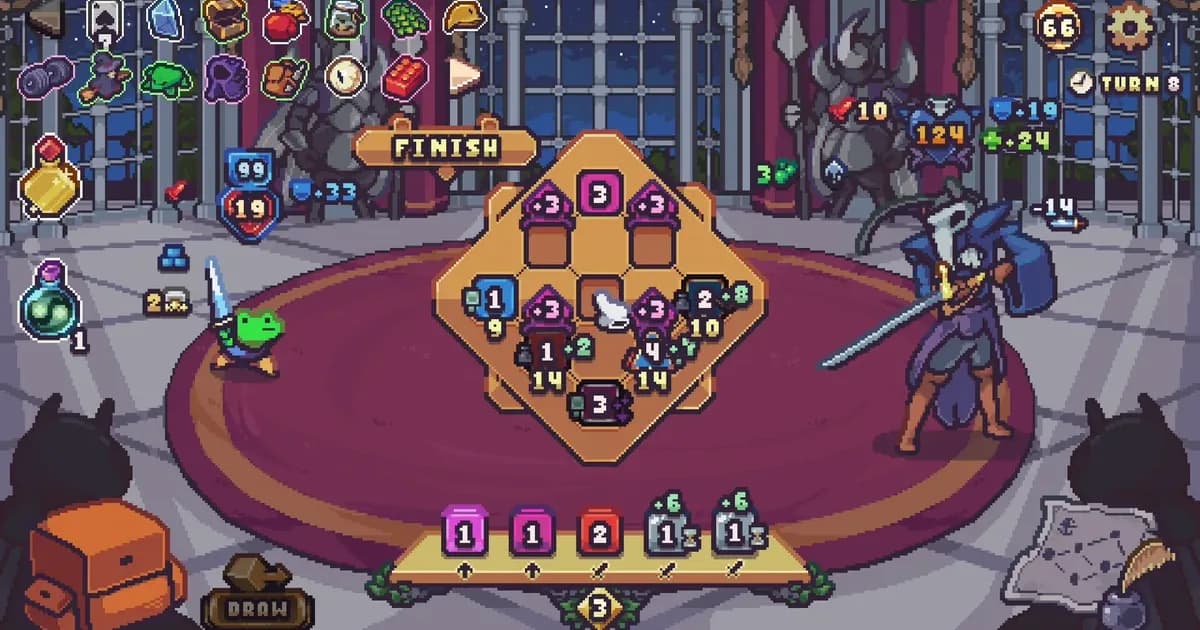
These die in the dungeon tips are for the floor 5 wall: the point where the early game's forgiveness runs out and the actual game begins. Die in the Dungeon's first two floors will probably convince you it's simpler than it is. Not entirely wrong; the early game is intentionally light. But floor 5 arrives with flanking enemies, relic decisions that compound across fights, and a board you can no longer ignore.
TL;DR: Move before rolling dice each turn. Take your first relic to match your starting die's strongest face type. Don't reroll face types until floor 3. Poison builds are the most forgiving start. Save healing potions for boss floors: effect potions are more valuable in boss fights than healing potions are in trash encounters.
Die in the Dungeon tips (quick answer)
- Position on the board before rolling dice: tile choice changes fight outcomes from floor 5 onward
- Commit to one build direction (attack, poison, or reroll-heavy) by floor 3, not floor 6
- Save die face rerolls until you've seen your first two relic options: build direction first
- Poison builds are the most forgiving starting path for players new to the dice system
- 36 potions in the game, but healing potions are most valuable on boss floors, not trash encounters
Die in the Dungeon tips: Overview
Die in the Dungeon 1.0 launched May 1, 2026, after 14 months and 8 days of Early Access. These tips are written for the 1.0 build with 31 unique dice, 142 relics, and 4 playable frog warrior characters. They're aimed at players in their first 3-5 runs who understand the basic mechanic (roll dice, fight enemies) but haven't yet figured out why some runs compound into something strong while others stall on floor 8.
The core of what separates good runs from stalled ones is usually one of two things: committing to a build direction too late, or ignoring the board until it costs a fight. Both are fixable with the right mental model going in.
GODEEPER: For a full breakdown of what ATICO built and whether the 1.0 content holds up. Die in the Dungeon Review: Dice-Building With Brains →
Tips that actually help
These aren't restatements of the tutorial. They're the things the game expects you to figure out on your own, usually around run 3 or 4.
Step-by-Step: Applying these Die in the Dungeon tips in your first real run
-
Move before rolling on every turn. Most beginners roll first and move after, which is the wrong order. Moving first lets you use terrain before committing your faces. Enemy movement is telegraphed: look at where they're going, pick a tile that avoids flanking, then roll. An enemy that can't flank you can't split your defense across two attack vectors. This is the single habit change with the highest impact.
-
After the first floor fight, read your relic offer against your starting die's face count. Pick the relic that matches your die's strongest face type. If your starting die has three attack faces and one poison face, don't take the poison relic: you don't have enough poison faces to make it work yet. Match the relic to what's already there, then build toward it.
-
Hold your face rerolls until floor 3 or later. In floors 1-3, your starting loadout handles the fights without customization. Spend those early fights reading enemy patterns and deciding your build direction. With a relic in hand and a direction confirmed, start shaping die faces toward the synergy: not before.
-
Push your primary die toward 4-5 matching faces. Die in the Dungeon's relic system rewards concentration. A die with four attack faces and a relic that triggers on each attack hit compounds every roll. A die split evenly between attack, poison, and reroll triggers nothing reliably. Commit to one face type before the halfway point of the run.
-
Consider a poison build for your first run. Poison deals damage over subsequent turns rather than on the current roll. It doesn't care about your board position: the damage happens whether you're flanked or cornered. Dice heavy in poison faces, relics that extend duration or stack additional DoT. It's not the highest ceiling build, but it's the most consistent one for players still learning the spatial layer.
-
Match your parry faces to what you actually need. Parry blocks specific attack types and depends on enemy pattern recognition you probably haven't built yet on floors 1-5. Keep one parry face if your die has space for it, but don't sacrifice attack or poison faces to get more parry until the late game makes it worth it.
Parry faces are situational, not foundational. Parry blocks specific attack types. At face value it looks defensive, but parry depends on enemy attack patterns you need to recognize in advance. In floors 1-5, most enemies don't require parry to survive. Don't build your primary die around parry until you've seen enough enemy types to know when it fires. Keep one parry face if your die has space for it. Don't sacrifice attack or poison faces to get more parry faces until the late game makes it worth it.
A typical die reward choice: pick the die that fits the face types your current build actually wants, not the one with the flashiest name.
Boss floors reward loaded potions, not preserved HP. The instinct is to save everything for emergencies. The better approach: go into a boss floor with full potion inventory AND healthy HP, having used your healing potions on the floors that threatened real HP loss and replaced them with effect potions from mid-floor drops. Boss encounters are long. An effect potion that buffs your dice for one fight does more there than anywhere else in the run.
The four characters aren't equally approachable. Each character starts with a different die configuration and relic affinity. For first runs, the character with the most attack-oriented starting die is the most direct path through the learning curve, since attack builds require the least relic knowledge to function. Poison-affinity characters and reroll-heavy characters both have higher ceilings but steeper setup requirements. Run those after you've completed a first run with the attack-focused character.
Tips
For roguelite players crossing over from card-based games: the equivalent of "hand size" in Die in the Dungeon is die count. More dice means more rolls, more triggers, more synergy surface area. Prioritize relics that add dice or increase rolls per turn before relics that modify existing face behavior. The modifier relics get stronger once there are more faces to modify.
Reroll faces have a second function that isn't obvious: they let you cycle past bad face results in a roll without spending a separate resource. A die with two reroll faces in a run where your relics reward specific face triggers means those reroll faces are actually damage: they skip unfavorable results and cycle toward the faces that trigger your relics. The calculation changes once you understand this. Reroll faces aren't wasted faces; they're probability management.
The 59 achievements in Die in the Dungeon serve as a legitimate guide to replay directions. Scroll the achievement list before run 3. You'll see objectives that hint at build types (poison achievements, parry achievements, achievement milestones by floor) you wouldn't have noticed playing normally. Some of them describe run strategies that are more interesting than the default approach. Thirty-one of the 59 also unlock new dice types that persist across all future runs: the Die in the Dungeon achievement guide maps which achievements unlock which dice and how to target the ones that change your build options permanently.
The Relics and Deck screen at a shop stop. This is where more dice get added to the deck, which matters more than modifying the faces you already have.
The most common mistake on repeat runs: players who've learned the system start over-engineering their builds. A tight two-die combo with a clear relic direction beats a complex five-die setup with mixed face types every time. The game rewards simplicity more than it punishes it. Complicated builds that almost work are still builds that almost work. If you're coming from something like Skull Horde, note that Die in the Dungeon demands more manual input: the board doesn't play itself, and neither do the dice synergies.
GODEEPER: All 59 achievements mapped, which 31 unlock permanent dice, and how to target the hard ones without grinding blindly. Die in the Dungeon Achievements: All 59 and Dice Unlocks →
Related Reading
- Die in the Dungeon Complete Guide 2026: Hub for all Die in the Dungeon guides: builds, relics, dice tier lists, characters, and achievements.
- Paralives Tips: 10 Things to Know for Early Access: Paralives tips for early access: career upgrade paths, trait synergies, and the money traps new Parafolk players hit....
- Die in the Dungeon Floor Guide: Floors 1 to 6 Breakdown: Die in the dungeon floor guide: what each floor demands, how floor 5 kills most.
- Die in the Dungeon Relic Tier List: Best Picks & Synergies: Die in the Dungeon relic tier list: all 142 relics ranked, the categories to prioritize.
- Die in the Dungeon Dice Tier List: Best Dice Ranked: Die in the Dungeon dice tier list: S to D ranking of all dice types,.
- Die in the Dungeon Relics: All Types, Triggers, and Effects: Die in the Dungeon relics guide: all 5 trigger categories, how each fires, which characters.
References
- Die in the Dungeon on Steam: store page, patch notes, and the achievement list that tells you what to attempt next
- ATICO on Steam: developer page
- Die in the Dungeon review: full assessment of the 1.0 build
Frequently asked questions
Q: What should I do on the first floor? A: Position before rolling. Look at enemy movement telegraphs, pick a tile that avoids flanking, then roll. The habit matters more in early floors than the results do.
Q: Should I reroll die faces early? A: Wait until floor 3 or later, ideally after seeing your first two relics. Reroll toward the face type your relics reward, not toward what sounds generically useful.
Q: Which character should I start with? A: Pick the character with the most attack faces in their starting die. It's the most direct path through the early floors without needing relic knowledge to function.
Q: What relics should I prioritize? A: Match relics to your highest face count. If you have three attack faces, take the relic that triggers on attack. Don't split early relic investment across multiple face types.
Q: How do potions work? A: 36 variants, mostly healing and one-turn effects. Save healing potions for boss floors. Effect potions that buff your dice are strongest when entering a fight with a locked-in synergy running.
Q: Is the game hard? A: The difficulty arrives around floor 5, not floor 1. The early floors are light on purpose. Players who stick past that inflection point generally find the difficulty readable: the enemy telegraphing gives you the information you need to respond.
Q: What's the best beginner build? A: Poison. It deals consistent damage without requiring perfect positioning, gives you time to learn the board, and the relic synergies are straightforward enough to identify in the first few runs.
Was this guide helpful?
About the author

Indie & JRPG Critic
Indie game evangelist and lifelong JRPG fan covering small studios since 2017. Mumbai-born, London-based. Writes the way she talks.
- 7 years indie games coverage
- JRPG and visual novel specialist
- Narrative design focus
Keep reading

Die in the Dungeon Characters: All 4, Which to Pick First
Guides · 8 min

Die in the Dungeon Relic Tier List: Best Picks & Synergies
Guides · 14 min

Die in the Dungeon Achievements: All 59 and Dice Unlocks
Guides · 17 min
Die in the Dungeon Guide: 4 Frogs, Builds & 59 Achievements
General · 17 min

Die in the Dungeon Dice Tier List 2026: Best Dice Ranked
Guides · 11 min
Die in the Dungeon Best Build: Attack, Poison, and Reroll
Guides · 8 min
Game deals · affiliate links

Disclaimer
This article is published for informational and entertainment purposes. It does not constitute professional financial, legal, or technical advice. Game performance, online services, patch schedules, and store listings change. Verify critical details (pricing, system requirements, regional availability) with publishers and storefronts before you buy. Affiliate links, where present, help support our editorial work and are labelled in our affiliate disclosure.
Comments
Loading comments…