
GuideDinoblade
Dinoblade Parry Guide: Deflect, Dodge, and Red Attacks
Dinoblade parry timing is the game's central skill check, but a useful guide has to separate what the developer confirmed from what players are still measuring. The official developer interview confirms that red-glint attacks cannot be blocked but can be parried, that a mistimed deflect is punished, and that the team made most previously unblockable attacks deflectable. It does not publish universal frame data. The safest combat advice is therefore animation-first: read the attack, choose deflect or dodge, and leave enough stamina to survive the recovery.
Sponsored

About the game
Dinoblade
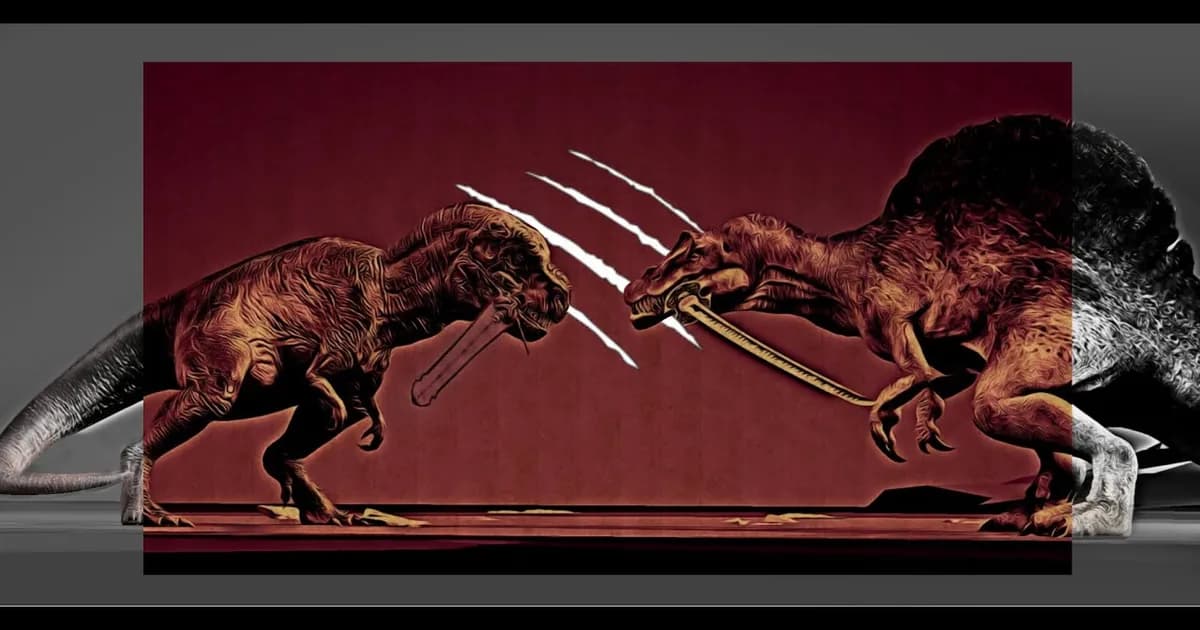
 The official developer thumbnail puts the game's core fantasy in one frame: two sword-bearing dinosaurs meeting in a deliberate duel.
TL;DR: Ordinary attacks can often be deflected, while a red glint means the attack cannot be blocked normally but can be parried. Deflect when you can read the wind-up and have room for the recovery; dodge when the camera, distance, or enemy group makes the timing uncertain. Do not trust an invented universal frame count. Build consistency around the enemy animation, then add counters and Soul Arts.
BESTPRICE: Want Dinoblade? Eneba sells a Steam key: Buy on Eneba →
Dinoblade parry: the short answer (quick answer)
The short version is:
| Situation | Best first response | Why |
|---|---|---|
| Clear ordinary swing | Deflect at the impact cue | The combat system rewards a deliberate timing check and lets you stay close. |
| Red-glint attack | Parry or create distance | The developer says it cannot be blocked, but it can be parried. |
| Unreadable charge or crowded camera | Dodge and reset | A missed parry is punished, and a safe reset gives the camera back. |
| Two-hit string | Wait for the second impact before countering | The first successful reaction does not mean the enemy is finished attacking. |
| Large arena attack | Move first, then re-enter | Preserving position is more valuable than forcing a low-confidence deflect. |
The Dinoblade bosses and abilities guide is the narrower reference for confirmed ability names. This article owns the repeatable combat decision: when to deflect, when to dodge, and how to practice without mistaking one player's timing test for an official rule.
Sponsored

Key Takeaways
- A red glint means the attack cannot be blocked normally, but it can be parried.
- A deflect is not a free button press. The developer says mistiming is punished, so learn the enemy's contact animation.
- The developer described roughly 95 percent of previously unblockable attacks as made deflectable, but no official move-by-move table exists.
- Dodge is the correct answer when the camera, distance, or attack read is unreliable. Surviving preserves the next learning attempt.
- Keep stamina and healing capacity in mind. The Dinoblade health ore locations guide covers the three permanent healing pickups.
Overview: how blocking, deflecting, and dodging differ
Dinoblade's combat vocabulary is easy to flatten into “parry everything,” but that is not how a reliable run works. A block is the ordinary defensive response the game denies for certain red-glint attacks. A deflect or parry is the precise timing response. A dodge is the escape option that changes your position and buys time when the read is not clean.
That distinction matters because a red-glint attack is not simply a stronger version of an ordinary swing. The developer interview specifically says red-glint attacks cannot be blocked but can be parried. If you see the cue and respond with a passive block, you have already chosen the wrong category. If you respond with a panic mash, you may hit too early and get punished by the enemy's active frames.
There is no published controller chart in the sources used for this guide that would justify a universal button callout. Inputs can differ by platform and settings, and exact timing can depend on the enemy animation. Use the control prompt shown in your own build, then judge the result by the impact and the game's response. That is more durable than copying a PC key into a PlayStation guide.
The same caution applies to “perfect parry window” claims. The developer said the system was expanded so that about 95 percent of attacks that were previously unblockable became deflectable during development. That is valuable evidence about the design direction, not a promise that every animation uses one identical window. The current Dinoblade bosses in order walkthrough is a better companion because it lets you practice one route landmark at a time.
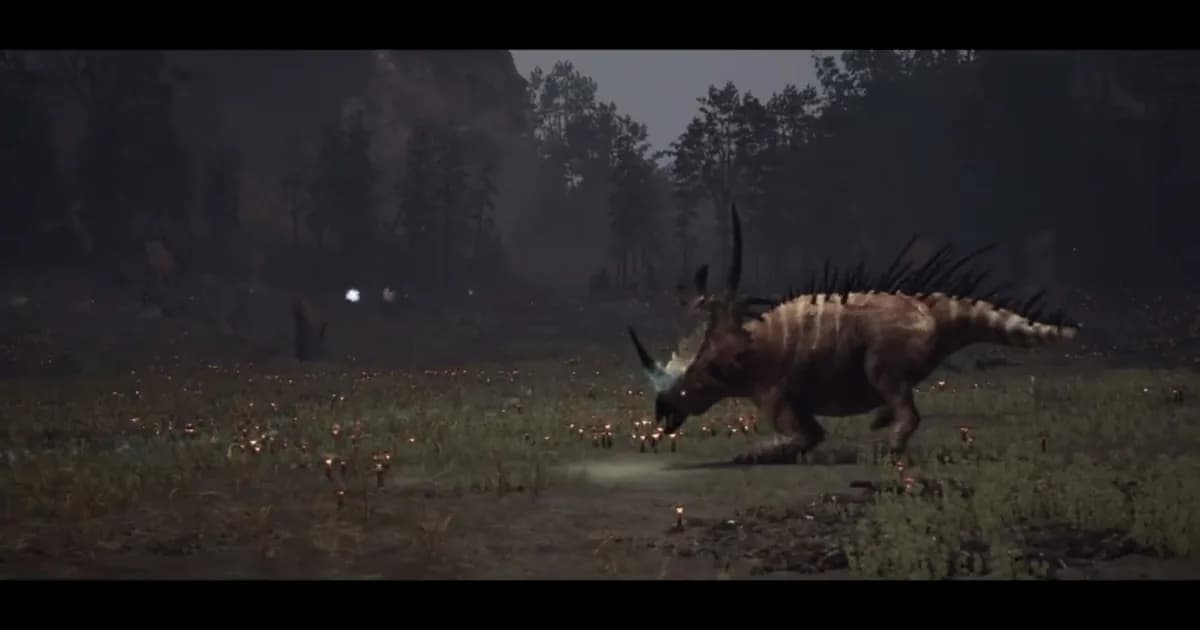
The red marker in official footage is the visual warning to stop treating the next hit like a normal blockable swing.
GODEEPER: If you are learning through campaign progression, keep the Dinoblade bosses in order walkthrough beside this guide. It separates route identity from the combat timing you need to learn at each encounter.
How to read a Dinoblade parry opportunity
Start with the enemy's body, not the color alone. A glint is useful because it tells you the normal block answer is unavailable, but the impact timing still comes from the wind-up, weapon path, and distance. Watch the shoulder, jaw, claw, or weapon leave its neutral pose. Press the deflect input as the attack is about to connect, then stop pressing until you see the result.
The most common beginner mistake is reacting to the start of an animation. Large dinosaurs make attacks look slow because the wind-up is broad. If you react on the first visible movement, you may deflect before the hitbox is near you. A second mistake is reacting to the hit itself. If the screen has already flashed from contact, you are late. Use the final part of the forward motion as the cue you are trying to memorize.
Treat the first successful deflect as information, not permission to attack forever. An enemy can have a follow-up swing, a delayed area attack, or a recovery that does not match its first animation. Hold your camera on the target and ask whether the encounter has actually returned to neutral. This is especially important for paired or large enemies, where the first target's recovery can hide the second target's wind-up.
Red-glint attacks are where the decision becomes binary. If you can read the timing, parry. If you cannot, dodge early enough to leave the danger zone and reset the camera. The game does not reward standing still to prove a point. A safe dodge that preserves healing is a successful combat decision even when it produces less immediate damage.
Step-by-Step: build consistent Dinoblade parry timing
1. Choose one ordinary attack in a quiet arena: Start with a single target and a readable swing. Do not begin with a late-game multi-enemy room or a boss phase that changes the camera every few seconds.
2. Watch three wind-ups without attacking: Let the enemy show the same motion. Identify when its body leaves neutral, when the weapon starts forward, and when contact is imminent. This builds an animation reference before you add input pressure.
3. Deflect only the next impact: Use one deliberate input at the contact cue. Do not hold the button and do not queue a second response immediately. Check whether the game gives the deflect response or whether the enemy clips you.
4. Repeat until the timing is boring: You are looking for a repeatable cue, not a lucky save. Three clean reactions in a row are more useful than one perfect reaction followed by panic attacks.
5. Add a red-glint attack: Once the ordinary swing is familiar, practice the red version or a red-glint enemy. Remember that the normal block response is not available. Choose the parry only when you can identify the impact timing.
6. Practice the miss deliberately: Move slightly out of position or press late once so you understand the punishment. The developer explicitly says mistiming is punished. Knowing the failure animation makes it easier to stop mashing after a bad read.
7. Add a two-hit string: After the first deflect, keep the camera on the enemy and wait. Many errors come from attacking during a second swing that the player forgot to count. React to the next impact instead of assuming the first response ended the sequence.
8. Add a dodge reset: Choose a point where you will stop contesting the timing. Dodge away, regain visual space, and re-enter when the enemy returns to neutral. This makes dodge a planned branch of the same decision tree, not a panic button.
9. Add one Soul Art only after the defense is stable: The Dinoblade achievements guide covers the broader upgrade and summon completion targets. Do not hide a timing problem under a damage ability. Learn the incoming attack first, then use the ability during a confirmed recovery.
10. Test the pattern in a real boss route: Take the practice into a campaign encounter and track which cues remain readable under pressure. If the camera or arena changes the answer, return to dodge and position before trying the parry again.
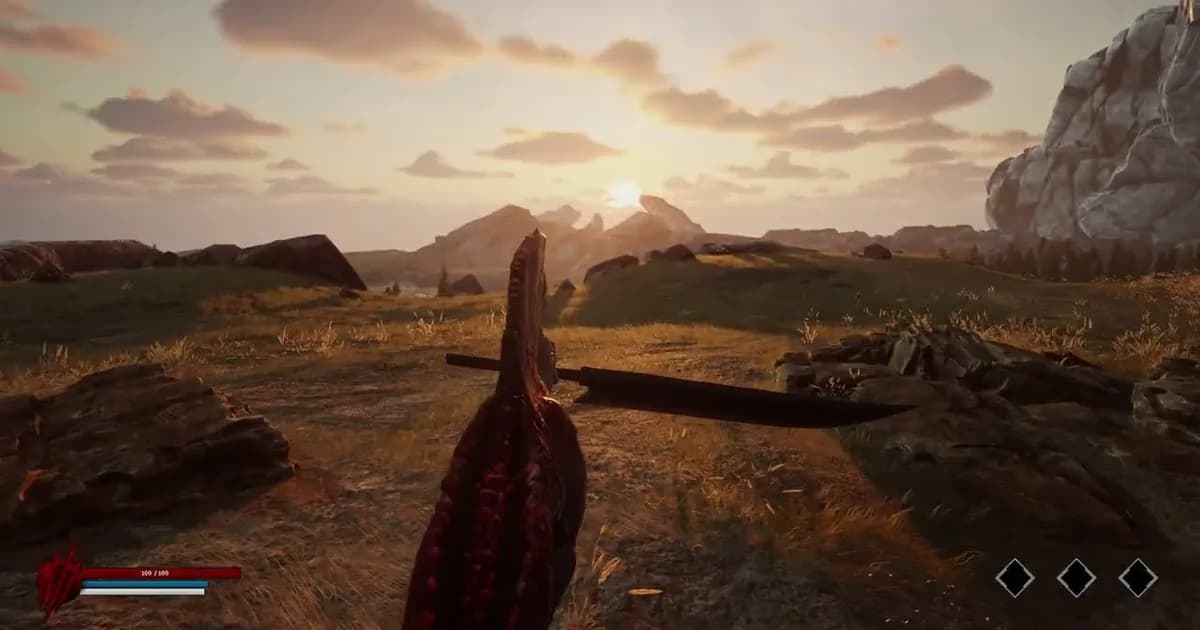
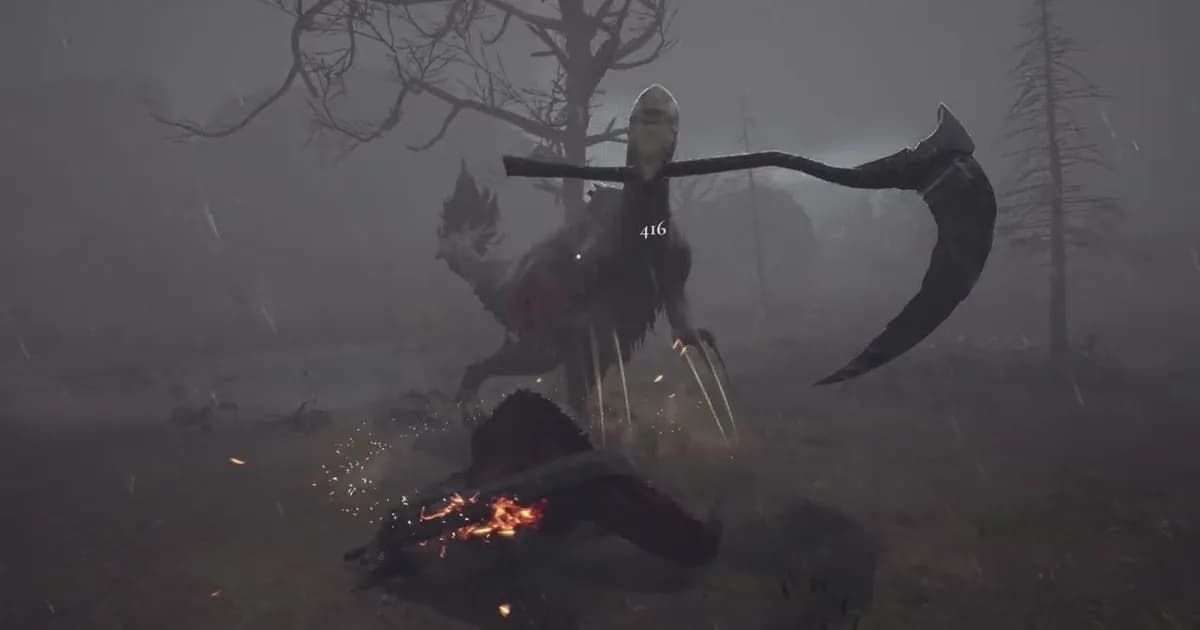
Official gameplay shows why the impact moment matters more than a generic “attack now” rhythm.
Tips for surviving missed parries
Leave a recovery budget. A successful deflect feels so good that it can tempt you to spend all available stamina on an immediate combo. Keep enough movement available to dodge the follow-up, especially when a boss can chain attacks or reposition outside the camera center.
Use the environment as a timing aid, not a crutch. A wall, rock, or arena edge can make a target easier to face, but it can also trap you when a red-glint attack arrives. Learn the animation in open space first, then use the arena geometry only when it gives you a clear view.
Do not measure success only by damage. A deflect that keeps you close is useful, but a dodge that preserves the healing charge is often worth more in a long boss attempt. The Dinoblade review explains why the game's directed encounters make this learning loop central to the experience.
Update before diagnosing a strange hitbox. Official July patches adjusted boss balance, fixed a Kasei progression problem, cleaned up the final-boss hitbox, added a travel option for a stuck boss fight, reduced Alpha Roar lag, and changed late Strength Instinct Counter scaling. If an attack behaves differently from an old recording, check the official news date and the confirmed ability notes before assuming your timing is wrong.
Avoid the false promise of a universal tier list. Dinoblade has no class or role selection that turns parry timing into a healer, tank, or damage build. You are learning one Spinosaurus's tools, attributes, healing, and Soul Arts. The Dinoblade complete guide keeps those systems in one place without inventing a party structure the Steam listing does not support.
Frequently Asked Questions
Can you parry red attacks in Dinoblade?
Yes. The developer has said red-glint attacks cannot be blocked but can be parried. A mistimed deflect is punished, so practice the incoming animation instead of relying on a generic color reaction alone.
Can every attack be deflected in Dinoblade?
The developer described roughly 95 percent of previously unblockable attacks as made deflectable during development. The exact current move list is not published, so treat unusual attacks as an observation to test, not a guaranteed rule.
Should you dodge or parry in Dinoblade?
Use a deflect when the attack is readable and you want to keep pressure. Dodge when the timing is unclear, the camera is crowded, or a missed parry would cost the run.
Does Dinoblade have parry frames or a parry window guide?
No official frame-data table has been published. Guides that give exact universal frame counts should be treated as testing notes, not developer-confirmed numbers.
What does a red glint mean in Dinoblade?
A red glint marks an attack that cannot be blocked normally but can be parried. It is a warning to make a deliberate deflect or create distance, not a signal to mash attacks.
What should I practice first in Dinoblade combat?
Practice one enemy's basic swing at a safe distance, then add red-glint attacks, two-hit strings, and arena pressure. Learn the animation and recovery before adding Soul Arts or aggressive counters.
Related Reading
- 1 Best Dinoblade Mod for PlayStation Prompts (2026): The best Dinoblade mod fixes PlayStation prompts, with Nexus setup, July 30 patch caveats, and
- Dinoblade Swords Locations: All 7 Weapons Guide (2026): Dinoblade swords locations guide: where to find all 7 named weapons, which are boss rewards
- Dinoblade Achievements Guide: parry, upgrade, boss, and exploration completion targets.
- Dinoblade Health Ore Locations: the three permanent Max Heal Ore pickups for longer practice attempts.
References
- Dinoblade on Steam: official combat-focused store description and single-player details.
- Dinoblade Steam news: official patch notes checked for boss, hitbox, travel, and counter changes.
- Dinoblade developer interview: Jean Nguyen's comments on red glints, deflectable attacks, and punishment for mistiming.
- Dinoblade combat reference: independent current-release terminology and practical combat cross-check.
- Dinoblade difficulty discussion: secondary player discussion used for difficulty context, not frame data.
- Dinoblade official developer channel: first-party combat footage used for image context.
Was this guide helpful?
About the author

GameBrief's byline for metroidvanias, RPGs, comparisons and design history. Places each game in its genre and argues both sides before picking one.
- Metroidvanias and RPGs
- Comparisons and design history
- Sources listed per article
Keep reading
Dinoblade Builds Guide: Health, Strength, and Stats (2026)
General · 10 min
Dinoblade Boss Rush Guide: How to Unlock It and Prepare
General · 9 min
Dinoblade Health Ore Locations: All 3 Max Heal Ores (2026)
General · 9 min
Dinoblade Swords Locations: All 7 Weapons Guide (2026)
General · 10 min
Dinoblade Bosses in Order: Full 16-Fight Route Guide
General · 11 min
Dinoblade Achievements Guide: All 29 Steam Trophies
General · 11 min
Sponsored
More game deals · affiliate links
Disclaimer
This article is published for informational and entertainment purposes. It does not constitute professional financial, legal, or technical advice. Game performance, online services, patch schedules, and store listings change. Verify critical details (pricing, system requirements, regional availability) with publishers and storefronts before you buy. Affiliate links, where present, help support our editorial work and are labelled in our affiliate disclosure.
Comments
Loading comments…