GameBrief · Guides
33 Immortals Beginner Guide: 9 Tips for Your First Runs
Reviewing
33 Immortals
Thunder Lotus · Thunder Lotus / Kepler Ghost
This 33 Immortals beginner guide covers what Thunder Lotus's 33-player roguelike actually rewards, because the way it punishes solo-minded play isn't obvious until you lose your third Inferno run in a row.
The game launched June 10, 2026 on Steam and Epic Games Store at $9.97. It draws its structure from Dante's Divine Comedy and pits up to 33 players simultaneously against waves of enemies across three realms. What it doesn't tell you clearly at the start is that almost every system pays out more when you play with the group rather than around it.
TL;DR: Read the in-game Compendium first. Pick the Dust-amplifying perk at your first upgrade point. Stick with the group, land Co-Strikes constantly, and don't teleport into an ascension battle unless you can actually help. These four habits carry more weight than any specific build choice in your first ten runs.
33 Immortals beginner guide: what to know before run one
33 Immortals is a co-op action roguelike where your group starts at 33 in the first realm, narrows to 22 in the second, and reaches the final boss with 11 players left. You queue solo or with up to four friends, matchmaking fills the rest instantly, and you jump directly into a live run.
The systems are straightforward to pick up but not obvious in how they interact. Core loop: move through chambers, kill enemies together, collect Dust to spend on perks at upgrade points, survive long enough to reach the realm boss. What scales your damage and resource gain isn't gear score or preparation. It's how tightly you coordinate with whoever happens to be running nearby.
Key Takeaways
- 33 Immortals runs 33 players through Inferno, 22 through Purgatorio, and 11 through Paradiso
- Co-Strike is the central mechanic: hitting the same enemy as another player at the same time boosts crit and earns more Dust
- No voice chat required: the emote and ping system is genuinely functional with strangers
- Read the Compendium before your first run. It covers mechanics the tutorial does not
- Never rush ascension battles. Teleport to whichever one needs more players, not the nearest one
- Weapons and relics are themed around the seven sins and virtues, each with distinct playstyles
Overview: how a 33 Immortals run is structured
A single run passes through three realms borrowed from Dante. Each one reduces the player count and increases the coordination requirements.
Inferno holds all 33 players. The emphasis here is on mob clearing and resource gathering. This is where you learn how Co-Strike works, how the emote system maps to group coordination, and how the bone shrines function as recovery points between chambers. Most new players die here not because the enemies are hard but because they keep running ahead of the group.
Purgatorio narrows to 22 players and introduces more structured encounters. The group that made it through Inferno has had time to align on how it plays together. The players who survive tend to be the ones who committed to group combat rather than farming solo kills.
Paradiso is the final realm, with just 11 players. The boss encounters here layer in coordination mechanics that require specific actions from the group, not just raw DPS. This is where the whole design pays off or falls apart depending on how much the surviving group actually learned to work together.
It's one of the more deliberately structured co-op roguelikes I've played. If you've tried Tears of Metal's co-op roguelike demo or similar games, 33 Immortals feels significantly less chaotic in practice because the group funnels through a defined series of chambers rather than spreading across an open map.
Co-Strike and Dust: the systems that matter most
Two mechanics define how 33 Immortals actually plays at the stat level.
Co-Strike activates when you hit the same enemy simultaneously with at least one other player. When it triggers, your crit chance goes up and the Co-op Power meter fills faster. Co-op Power fuels your strongest abilities. In practice: two players on the same target deal more than twice the solo damage and earn more Dust per kill. That gap compounds fast over a full Inferno run.
This makes positioning important in a way that most action roguelikes don't force. You want to be where the group is attacking, not wherever the most enemies are scattered. The instinct to clean up isolated mobs costs you Co-Strikes on every major target.
Dust is the primary resource you spend at upgrade points between chambers. Players consistently report that Co-Strikes generate more Dust per kill than solo attacks. The early perk that increases your Dust gain compounds across the whole run. Spending Dust on Dust generation first is less exciting than grabbing a damage upgrade, but it pays out every time you upgrade for the rest of the run.
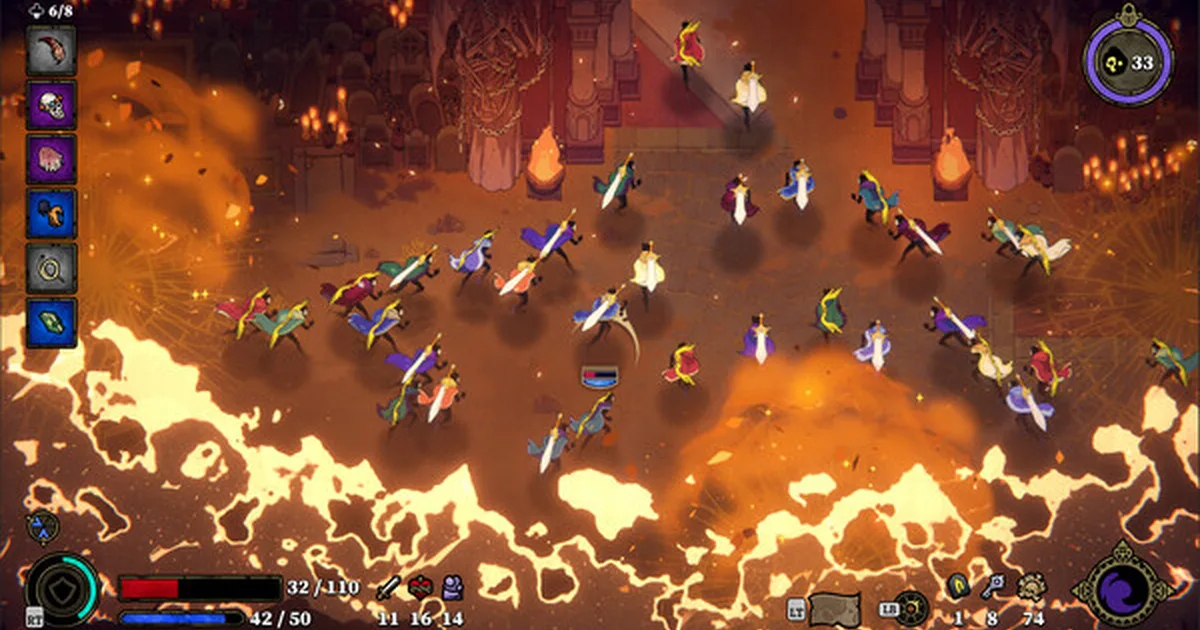
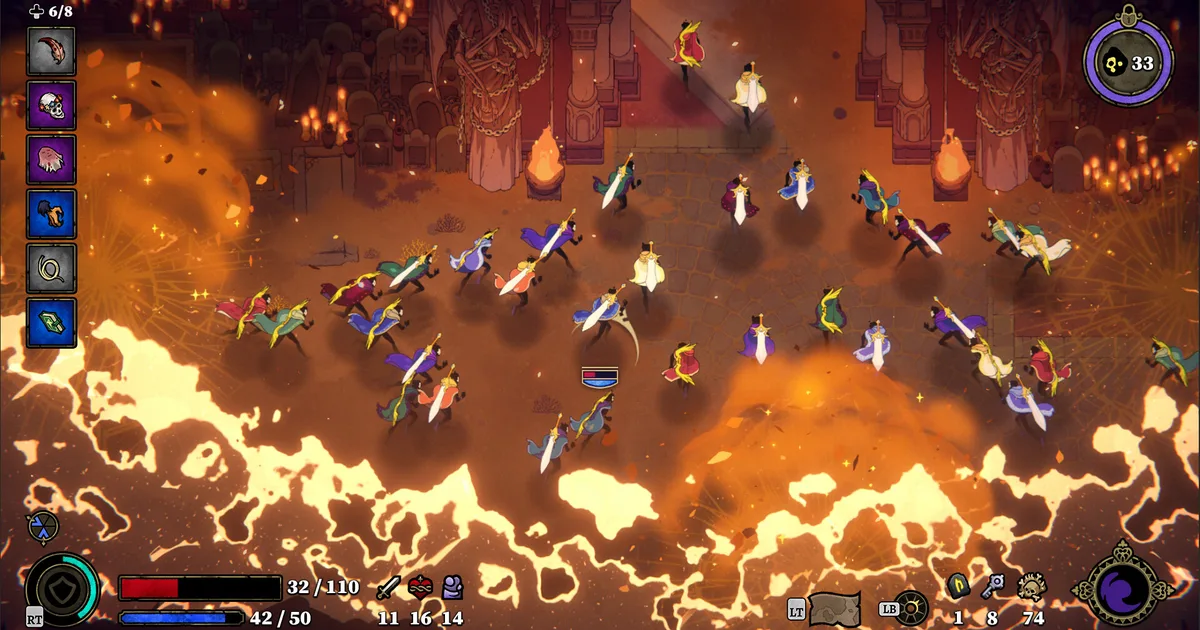
 A mid-run fight in Inferno. Co-Strike activates when multiple players hit the same target at once, boosting crits and filling the Co-op Power meter faster than solo attacks.
GODEEPER: If you want the full launch breakdown, including what changed in the 1.0 build and the Xbox delay situation: 33 Immortals 1.0: Three Realms, Final Boss, Now on Steam →
33 Immortals beginner guide: step-by-step first Inferno run
Here's what a functional first Inferno run looks like in practice.
Before you queue: Open the Compendium from the main menu. Community players flag this repeatedly because the in-game tutorial covers the basics but not the nuances of Co-Strike, the emote system, or how ascension battles work. Five minutes with the Compendium saves you the confusion of figuring these out while 32 other players are counting on you.
When the run starts: Find the nearest cluster of players and stay close. The temptation is to scout ahead or clear side chambers quickly. Both tend to disconnect you from Co-Strike opportunities. Let the group set the pace, especially in the first few chambers where you're still reading the room.
At the first upgrade point: Choose the Dust-generating perk if it's available. If it's not, pick something that benefits group combat rather than solo output. Every upgrade point after the first is informed by your Dust reserves, so starting strong on Dust income shapes the whole run.
When you see a bone shrine: Stop and heal before your group moves on. Bone shrines reset the healing window, and skipping one to keep pace with faster players leaves you exposed in the next chamber. The group tends to consolidate around shrines naturally once everyone learns to stop rushing.
When an ascension battle appears: Don't go immediately. Check the map or signals from other players to see which ascension battle is struggling. A losing battle needs one or two more bodies more than a winning one needs you. Teleporting to reinforce a failing fight is almost always the better play.
At the realm transition: The players who survive into Purgatorio are ranked by how much they contributed to group coordination, not individual kill count. This is worth understanding before your first run because it reframes what "playing well" looks like in 33 Immortals.
9 tips for new 33 Immortals players
These tips come from community discussion in the subreddit during the first days after launch.
-
Read the Compendium. It's in the main menu and covers systems the tutorial skips. Worth five minutes before your first run.
-
Pick the extra Dust perk first. It is less satisfying than damage upgrades early on but it funds every subsequent upgrade choice. The compounding effect is real.
-
Attack in groups, always. Every time you Co-Strike instead of soloing a mob, you get more Dust and build Co-op Power faster. The entire design rewards this.
-
Use emotes for communication. There are emotes for marking sigils, pointing out special creatures, and directing the group toward objectives. With strangers, these do most of the work that voice chat would otherwise handle.
-
Don't rush chambers. Wait for your group and heal at bone shrines before advancing. A chamber cleared ten seconds faster isn't worth entering the next one at half health.
-
Tag special creatures with emotes. Certain enemies (referred to as Lucido creatures by community players) are worth calling out. Coordinated group focus on them pays out better than random targeting.
-
Never ascend immediately. When ascension becomes available, look at the battlefield first. Go where you are needed, not where you were heading.
-
Let the weapon theme guide your build. Weapons and relics follow the sin and virtue themes of each realm. Leaning into one theme rather than spreading across several tends to produce more coherent builds.
-
In Paradiso, read the boss mechanics before you attack. The final realm boss encounters have specific group-coordination requirements. Pile-on damage without addressing the mechanics and you'll wipe the run.
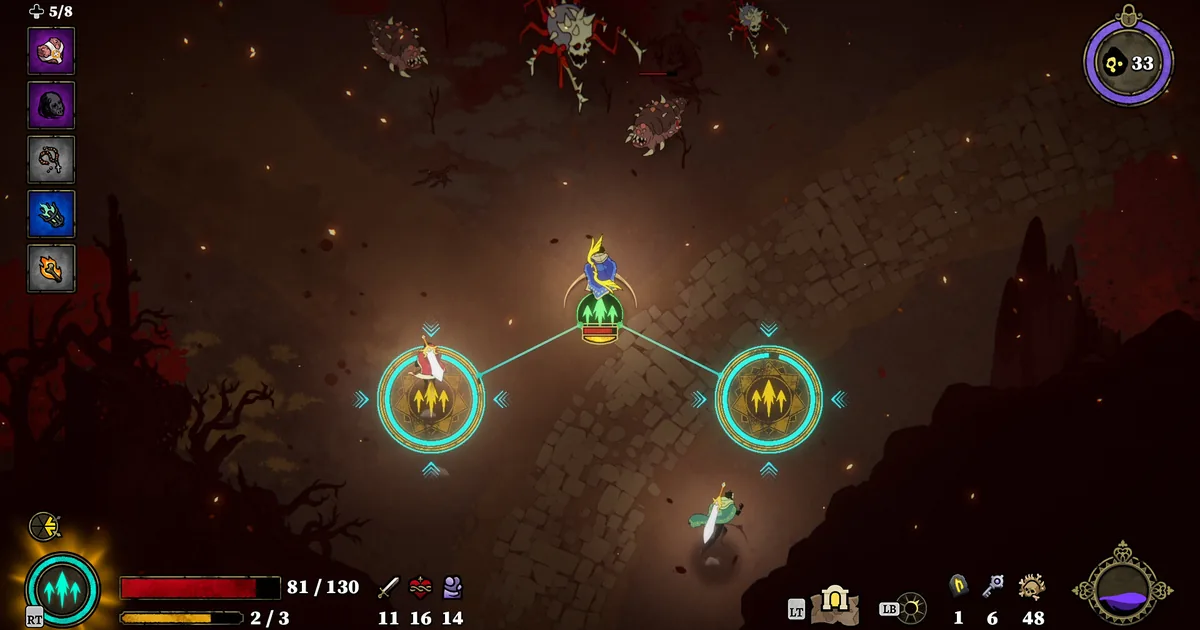
 Moving through a chamber in Inferno. Staying with the group and reading the room before charging ahead reduces the amount of solo clearing that costs Co-Strike opportunities.
GODEEPER: Looking for other co-op roguelikes launching this season? Best Indie Co-op Games: Steam Summer Sale 2026 →
Common beginner mistakes in 33 Immortals
A few patterns show up repeatedly in new player accounts from the first week after launch.
Playing at the front of the group is the most common one. Moving ahead of the cluster means you clear enemies before others can Co-Strike them, which reduces everyone's Dust income including your own. Slower, grouped clearing generates better rewards.
Spending Dust on damage upgrades before Dust income leaves you upgrade-poor for the second half of the run. The Dust-amplifying perk feels weak in isolation but its value accumulates over every upgrade point.
Ascending at the first opportunity rather than reinforcing struggling ascension battles wastes cooperative potential at one of the highest-leverage moments in the run. A failed ascension is a net loss for the group regardless of where you were.
Ignoring the emote system entirely turns 33 Immortals into a chaotic mob rush. The emotes are functional coordination tools, not cosmetic features. Teams that use them consistently push further than teams that don't, even when skill levels are otherwise similar.
33 Immortals sits in an unusual spot in the current co-op roguelike lineup. See where it lands among this year's options in our best roguelike games 2026 roundup.
Related Reading
- 33 Immortals 1.0: Three Realms, Final Boss, Now on Steam: Full launch coverage including the Xbox delay and what changed in the 1.0 build.
- Tears of Metal: Co-op Hack-and-Slash Roguelike Demo 2026: Another co-op roguelike with Steam Next Fest demo access that pairs well with 33 Immortals if you want a smaller-scale option.
- Best Indie Co-op Games: Steam Summer Sale 2026: Six co-op picks with pricing context for the summer window.
- 33 Immortals Achievements Guide: How to Get All 33: once you've got the fundamentals down, the full achievement list and how to knock them out efficiently.
- Best Roguelike Games 2026: Where 33 Immortals fits against the year's other roguelike releases.
Frequently Asked Questions
How many players do you need to start a 33 Immortals run? You can queue solo and matchmaking fills the remaining spots instantly. You can also bring up to four friends and the system adds strangers for the rest. No lobby setup is required.
What is Co-Strike in 33 Immortals? Co-Strike activates when you and at least one other player hit the same enemy at the same time. It increases your critical hit chance and fills the Co-op Power meter, which powers your strongest abilities. It's the core cooperative mechanic in the game.
What is the Dust resource in 33 Immortals? Dust is the primary resource earned by defeating enemies during a run. Players report that Co-Strikes generate more Dust than solo kills. Spending Dust on the Dust-amplifying perk early compounds its value across every subsequent upgrade point.
Can you play 33 Immortals without voice chat? Yes. Thunder Lotus designed the game around emotes and pings. Use them to mark sigils, tag special creatures, and signal ascension battle positions. The system functions well with strangers.
What happens when you reach Paradiso in 33 Immortals? Paradiso is the third realm with only 11 players remaining. Boss encounters there require specific coordinated group actions, not just stacking damage. Groups that ignore the mechanics will wipe.
Should you ascend immediately in 33 Immortals? No. When an ascension battle becomes available, find which one needs more players and teleport there instead of ascending straight away. One extra player can tip a failing fight to a win, and that matters for who makes it to Paradiso.
Does 33 Immortals have achievements? Yes, exactly 33 achievements matching the game's central theme. They cover run completions, cooperative actions, and specific milestones across all three realms.
References
- 33 Immortals on Steam: official store page with pricing, system requirements, and update history
- Thunder Lotus Games: developer studio behind Spiritfarer and 33 Immortals
- r/33Immortals on Reddit: active community subreddit where the beginner tips in this guide were sourced
Was this guide helpful?
About the author

Indie & JRPG Critic
Indie game evangelist and lifelong JRPG fan covering small studios since 2017. Mumbai-born, London-based. Writes the way she talks.
- 7 years indie games coverage
- JRPG and visual novel specialist
- Narrative design focus
Keep reading


Disclaimer
This article is published for informational and entertainment purposes. It does not constitute professional financial, legal, or technical advice. Game performance, online services, patch schedules, and store listings change. Verify critical details (pricing, system requirements, regional availability) with publishers and storefronts before you buy. Affiliate links, where present, help support our editorial work and are labelled in our affiliate disclosure.