GameBrief · General
33 Immortals Review: Co-op Roguelite Worth Playing 2026
33 Immortals review: Mostly Positive roguelite at $9.97. Thunder Lotus puts 33 players in Dante's Inferno with Co-Strike and three narrowing realms.
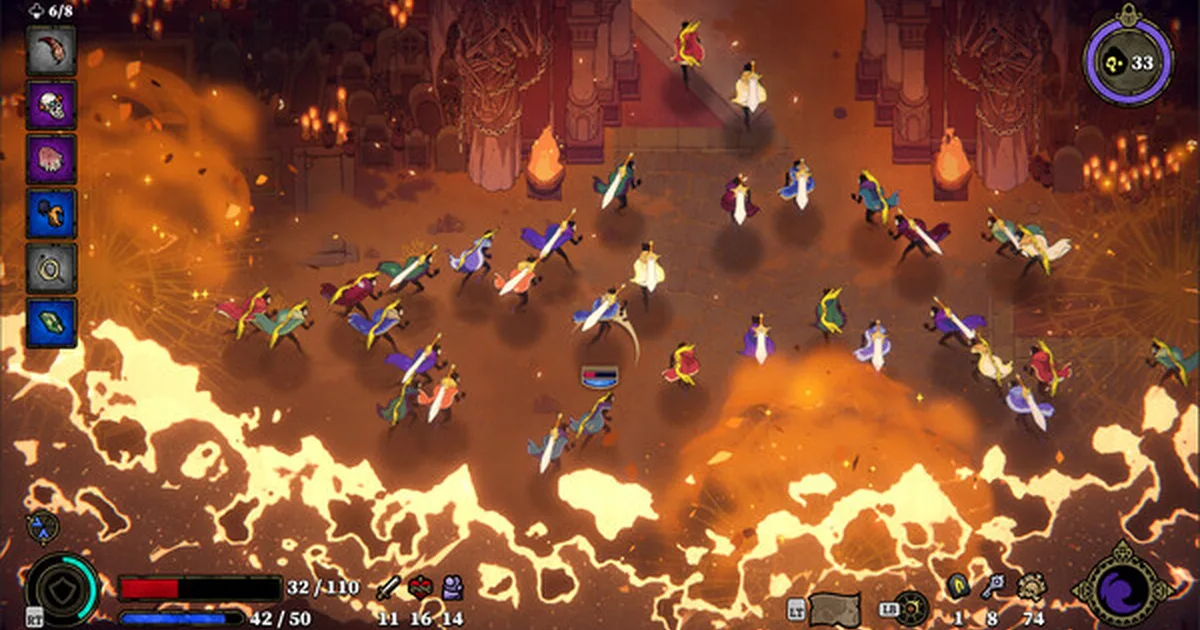
Reviewing
33 Immortals
Thunder Lotus · Thunder Lotus / Kepler Ghost
Score
Reviewed build: 1.0
Pros
- Co-Strike mechanic rewards coordinated play without requiring voice chat
- 33-player scale is genuinely unlike anything else in the genre
- Three realms with narrowing player counts create natural narrative tension
- $9.97 is an easy ask for a co-op experience this distinct
Cons
- Solo runs strip out most of what makes the game work
- Enemy and boss variety within each realm is thin for a 1.0 release
- Dust economy and perk selection are unexplained and confusing early on
Verdict
33 Immortals nails one genuinely new idea. The 33-player co-op format works, even if the content breadth is still catching up to the concept.
This 33 Immortals review starts with the obvious question: what happens when you can't field 33 players? The answer is less. Thunder Lotus built the whole architecture around group play so completely that a five-player session in Inferno tells you almost nothing about what the game actually is.
The good news is that with a decent crowd, it works. The bad news is that "33 players online simultaneously" is not a sentence that has historically described a frictionless Tuesday night.
Key Takeaways
- Price: $9.97 on Steam and Epic Games Store (PC), Xbox Game Pass Day One
- Developer: Thunder Lotus / Published with Kepler Ghost
- Platforms: PC (Steam, Epic), Xbox
- Realms: Three (Inferno, Purgatorio, Paradiso), players narrow from 33 to 22 to 11
- Central mechanic: Co-Strike (simultaneous hits trigger crits and charge Co-op Power)
- Achievements: 33 total, matching the theme
- Rating: 7.5 out of 10
Overview: 33 Immortals at $9.97
33 Immortals is a co-op roguelite built around a Dante's Divine Comedy premise. You and up to 32 other condemned souls fight through three realms in parallel, hunting the same final boss while the game narrows the eligible group from 33 to 22 to 11 as you progress toward Paradiso.
Thunder Lotus released version 1.0 on June 10, 2026, after an Early Access period that the studio used to build out the second and third realms. The Xbox version followed on June 11.
The Dante framing isn't just aesthetic. The realm structure directly maps to Inferno, Purgatorio, and Paradiso, and the narrowing player count mimics the journey toward the innermost circle. It's one of those cases where the thematic concept and the mechanical concept land in the same place. That doesn't happen by accident.
Weapons and relics draw from the seven sins and virtues system, giving the loot some coherent internal logic instead of the usual random fantasy nouns. The Dust resource (earned from enemies and spent at upgrade checkpoints) powers the perk system, though the game doesn't explain this clearly and many players spend their first few runs unsure what Dust is for.
For more context on what changed in the 1.0 launch specifically, our 33 Immortals 1.0 launch recap covers the new content added in the final patch.
Gameplay: Co-Strike and the dust economy
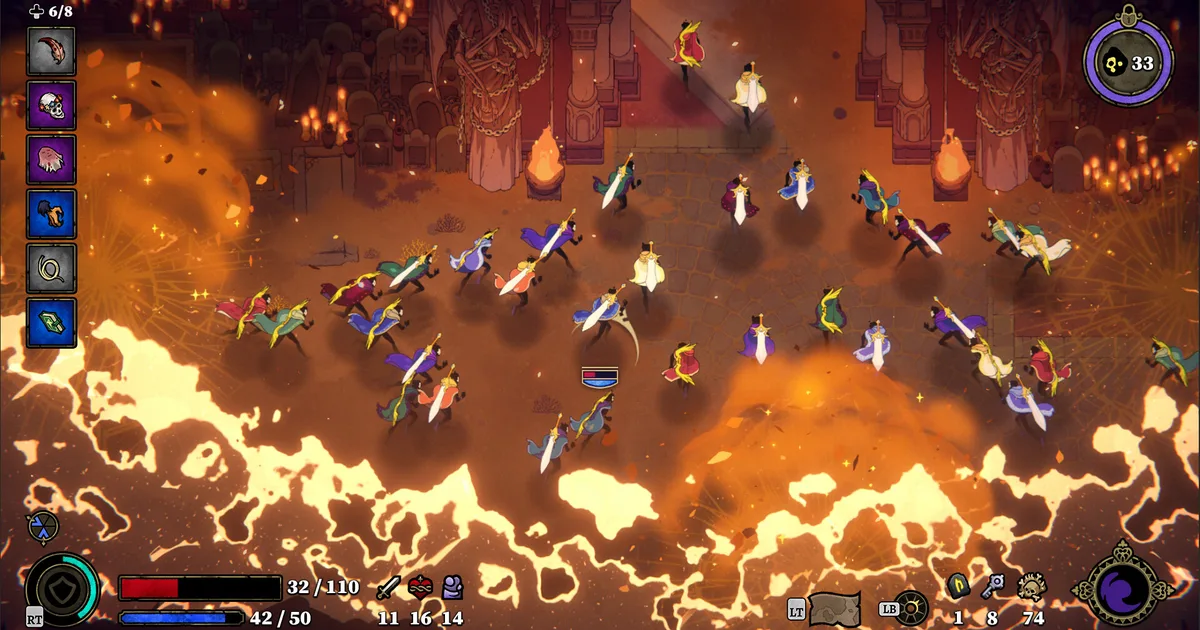
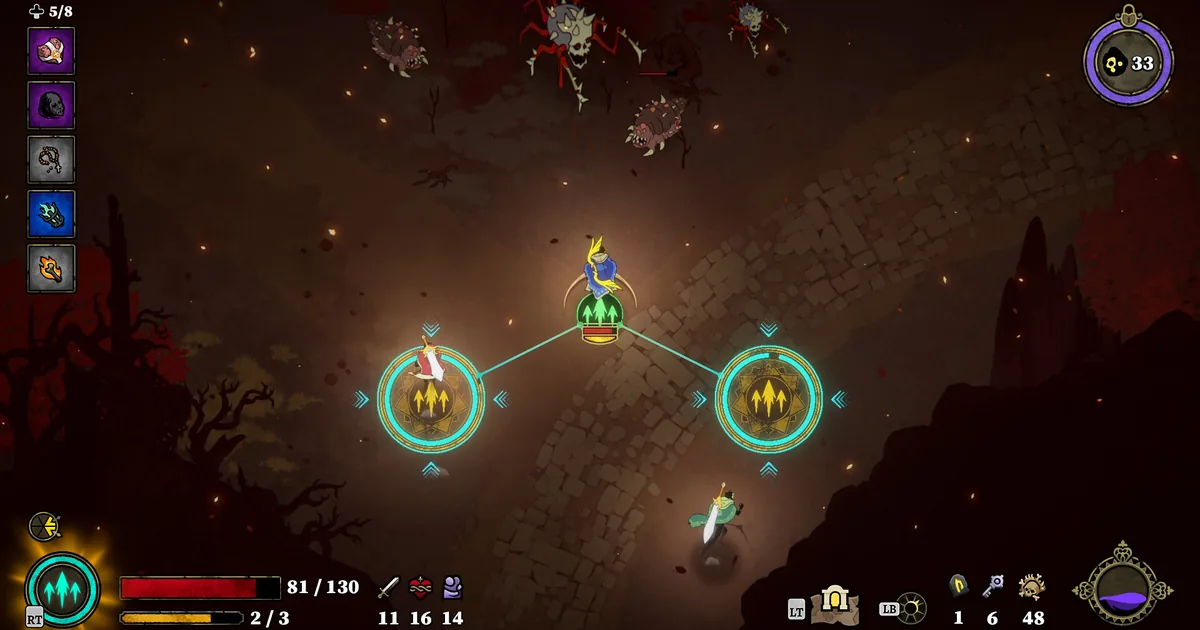
The central design idea of 33 Immortals is Co-Strike. When two or more players hit the same target at the same moment, the game triggers a synchronized hit bonus: increased crit chance plus a charge on the Co-op Power meter, which unlocks coordinated team abilities.
This isn't a passive system. It rewards players who are paying attention to where their teammates are attacking. In a 33-player group, the on-screen chaos makes Co-Strike look accidental, but it isn't. There's a brief telegraph window on enemies, and players who learn to stack on the same target consistently get noticeably better returns from the Dust economy.
The Dust system itself is the weakest part of the tutorial. You earn Dust through combat. You spend Dust at upgrade nodes scattered through each realm. But what the nodes offer, how the sin-and-virtue perk tree interacts with your chosen weapon type, and why some perks feel unavoidable while others seem vestigial: none of this is surfaced in-game. The 33 Immortals beginner guide covers the Dust loop in depth, which tells you something about how well the game explains it on its own.
Boss design is functional. Each realm has a main boss encounter scaled for the group count (33, 22, and 11 players respectively), and the telegraph windows are readable once you know they're there. What's missing is variety. The between-boss enemy pool feels thin across all three realms, and players who run the game more than a few times will have memorized every encounter type by the end of the second session.
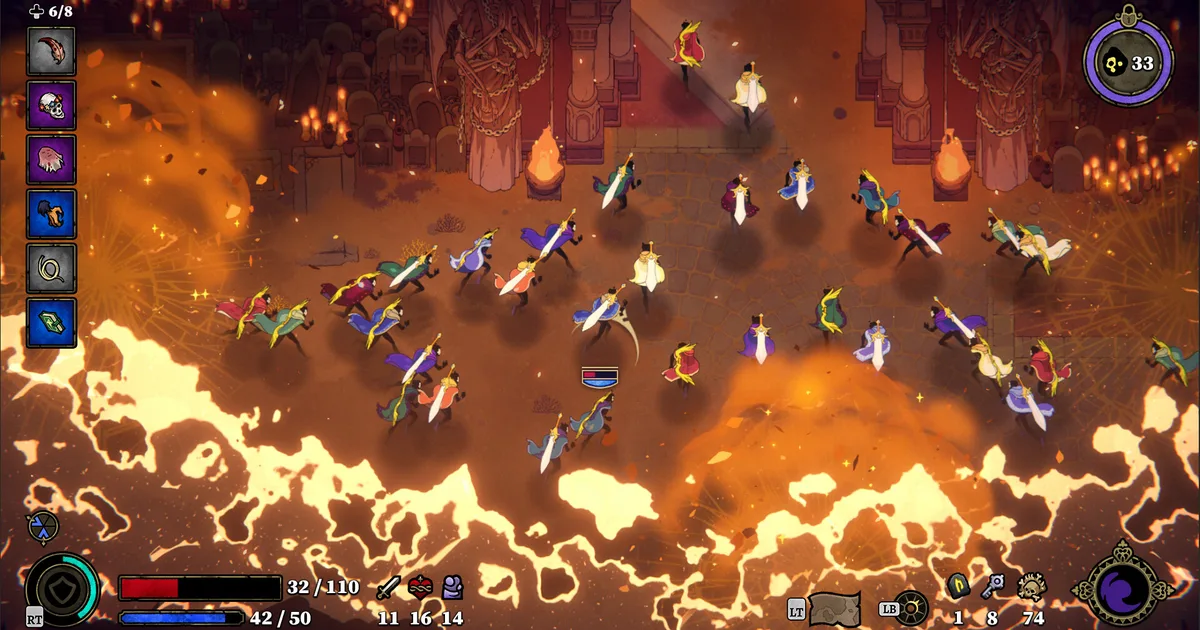
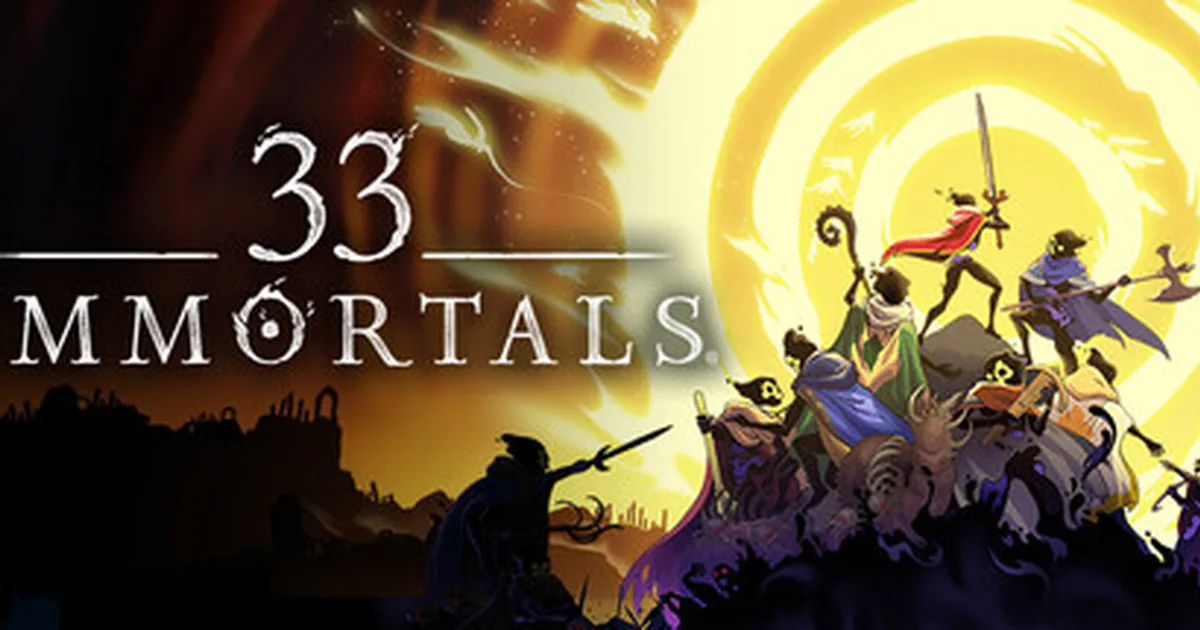
 Multiple players converging on a boss during a Co-Strike window. The mechanic is designed for exactly this moment.
The three realms: Inferno, Purgatorio, Paradiso
The realm structure is the game's best single idea. Starting with 33 players in Inferno and narrowing to 11 by Paradiso does two things: it creates escalating pressure (the group shrinks because people die, not because the game cuts them arbitrarily), and it keeps the boss fight appropriately sized for the remaining players.
Inferno is the most chaotic realm, and the most forgiving. With 33 players, Co-Strike procs constantly, the Dust economy flows, and the screen is loud. Purgatorio tightens the challenge as the group shrinks to 22; players who coasted on Inferno chaos start feeling the gap in coordination. Paradiso with 11 players is where the game finally becomes demanding.
The issue at 1.0 is that Inferno and Purgatorio share visual and enemy design logic too closely. Frozen Peak enemies look different from Inferno's demonic roster, but the encounter patterns repeat. Players pushing into their fifth or sixth run notice this before the content resolves itself.
The 33 Immortals co-op strategy guide goes into group composition and Co-op Power usage across all three realms.
 The tone and player count both shift by the time Paradiso arrives. The same run that felt chaotic in Inferno becomes focused here.
What works and what doesn't
What works: the $9.97 price relative to the concept. You're not paying for a genre-defining title with 40 hours of hand-crafted content. You're paying for a single, novel co-op idea executed with genuine craft. At that price, the thin enemy variety is a smaller complaint than it would be at $30.
What works: the Dante framing. Most roguelites pick a setting and call it flavor. 33 Immortals built its mechanical structure out of the source material, and the result is that the lore and the design feel like the same sentence.
What doesn't work: solo runs. Playing 33 Immortals alone is like watching someone else's group play. The Co-Strike system has nothing to trigger, the Dust economy drips instead of flowing, and the 33-to-11 narrowing dynamic loses all meaning when you were always alone. The game doesn't advertise itself as a solo experience, but the absence of any solo-specific mode or rebalancing is a gap at launch.
What doesn't work: the tutorial. Finn has complained about tutorial bloat before; this is the opposite problem. The tutorial tells you the conceptual premise and points you at enemies. The Dust system, Co-Strike timing, and perk tree interactions are left entirely to the player. For $9.97 this is tolerable. For new players who bounce after two failed Inferno runs because they don't know what Dust does, it's a problem.
33 Immortals verdict
33 Immortals earns a 7.5. The concept works. The execution is incomplete in places that feel patchable rather than structural. The price is right for what the game actually is.
The 33-player co-op roguelite format is the whole product here, and Thunder Lotus commits to it without hedging into single-player or smaller-group modes. That commitment cuts both ways: it makes the best sessions feel genuinely distinct, and it means the worst sessions (low population, nobody coordinating) have nothing to fall back on.
If you want more depth on Thunder Lotus's delivery of the 1.0 content versus Early Access promises, watch the official 1.0 launch trailer on YouTube before deciding. The game shown there is the game shipped.
Frequently Asked Questions
Is 33 Immortals worth buying?
At $9.97 on Steam, yes. The co-op roguelite format is novel and the Co-Strike mechanic adds genuine depth. Solo play is limited, but with 10 or more players the experience justifies the price.
Can you play 33 Immortals solo?
Yes, but the game is designed for group play. Solo runs skip the Co-Strike mechanic's group-coordination layer and the realm-narrowing dynamic feels hollow without a real crowd around you.
How long does a 33 Immortals run take?
A full successful run through all three realms (Inferno, Purgatorio, Paradiso) takes roughly 45 to 60 minutes. Failed runs end earlier depending on how far the group reaches.
What platforms is 33 Immortals on?
33 Immortals launched on PC via Steam and Epic Games Store on June 10, 2026, and on Xbox on June 11, 2026. The Steam version is currently $9.97.
What is the Co-Strike mechanic in 33 Immortals?
Co-Strike triggers when multiple players hit the same target simultaneously. Synchronized hits increase critical hit chance and charge the Co-op Power meter, which unlocks shared team abilities.
Is 33 Immortals crossplay between PC and Xbox?
Crossplay between Steam and Xbox was not confirmed at the 1.0 launch. Check Thunder Lotus's official channels for the current status as it may have been added post-launch.
References
- 33 Immortals on Steam (Thunder Lotus, current price and review score)
- Official 1.0 Launch Trailer on YouTube (Thunder Lotus official channel)
- r/33Immortals on Reddit (community discussions, Co-Strike tips, Dust farming threads)
- 33 Immortals is $14.89 on Steam with no discount right now. Loaded (sponsored) lists the same key at $9.29, a substantial saving.
About the author

Games Critic
Games writer and reluctant optimist who has reviewed over 400 titles across 9 years. Irish, currently in Berlin. Has strong opinions about tutorial design.
- 400+ games reviewed across 9 years
- Platformer and horror specialist
- Narrative design focus
Keep reading

Disclaimer
This article is published for informational and entertainment purposes. It does not constitute professional financial, legal, or technical advice. Game performance, online services, patch schedules, and store listings change. Verify critical details (pricing, system requirements, regional availability) with publishers and storefronts before you buy. Affiliate links, where present, help support our editorial work and are labelled in our affiliate disclosure.