
GuideLegionbound
LegionBound Barkeep Group: All 11 Classes & Synergies
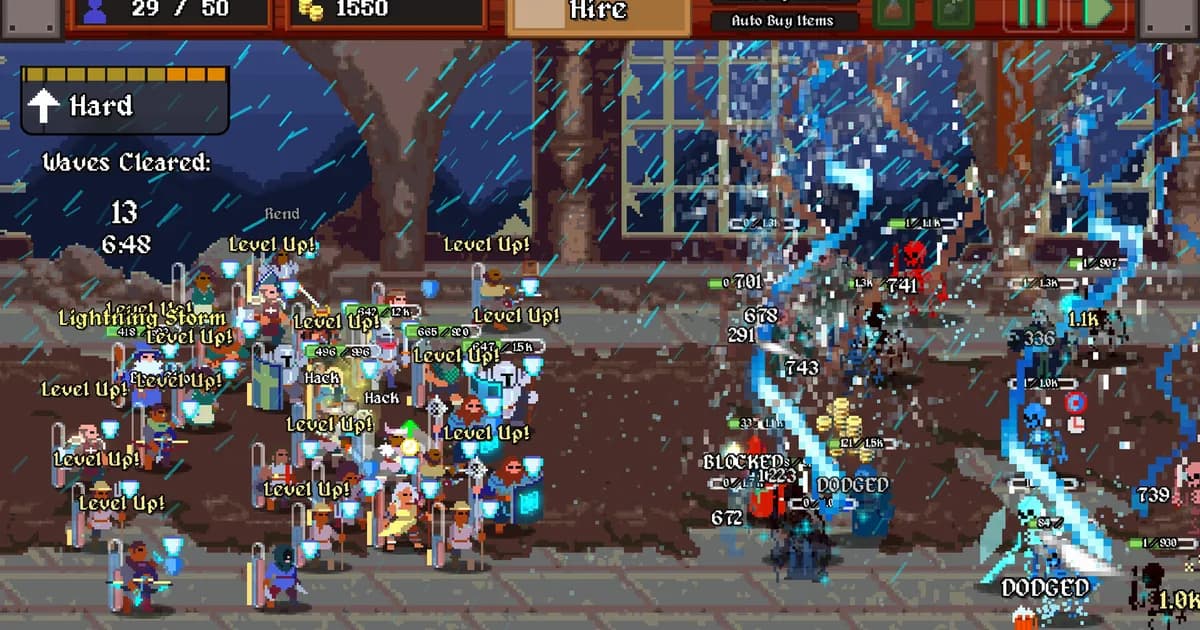
About the game
LegionBound
Spicy Garlic Games · Spicy Garlic Games
This LegionBound Barkeep group guide covers the original mid-size synergy loop: 11 of the original 30 classes, built as a focused cluster of physical and utility heroes. The current game has 42 classes after later updates, so this article deliberately labels the Barkeep list as the original loop rather than pretending it is the complete current roster. With two starter classes in the group, it remains an accessible loop to build into, and its tighter size means you can reach partial synergies without collecting every hero.
TL;DR: The Barkeep group is LegionBound's mid-size loop, 11 of the original 30 classes: Barkeep, Herbalist, Ranger, Artificer, Samurai, Rogue, Duelist, Gunslinger, Swashbuckler, Bard, and Monk. Synergy is circular: each class upgrades into a subclass when paired with the next class in the loop (Rogue to Assassin, Barkeep to Alchemist, Ranger to Snapshot, and so on). Two starters (Ranger, Rogue) live here, so it is easy to enter. The most accessible chain is Rogue to Duelist to Gunslinger, two subclasses from one chain of three. You do not need all 11, any adjacent pair triggers the earlier class's subclass, so build focused partial chains.
LegionBound Barkeep group (quick answer)
The Barkeep group is an original 11-class loop, not the full current LegionBound roster. Start from Ranger or Rogue when possible, then recruit the next class in the verified loop so the earlier hero can ascend. Rogue plus Duelist activates Assassin, while Duelist plus Gunslinger activates Fencer. Add Swashbuckler before calling Gunslinger's Trickshot active.
Current status: September 2026
The official Steam snapshot checked for this audit listed LegionBound at $7.99 on sale from $9.99, with the sale ending September 28, 2026. It showed 82% Very Positive overall reviews from 687 reviews and 80% Very Positive recent reviews from 45 reviews. The current store page lists 42 classes, so the original 30-class loop language in this article must not be read as a current total.
The official Patch 1.1 announcement says it added 12 new heroes, over 400 additional Ascension combinations, 16 new items, loadout saving, and an improved summon system. The Barkeep list below is the original loop verified against a dedicated class reference; the 12 post-launch heroes sit outside this article's 11-class scope.
LegionBound Barkeep group: the original mid-size loop
LegionBound has 42 classes total; the original 30 split into three circular synergy loops, and the Barkeep group is the mid-size one with 11 classes. It sits between the sprawling 14-class Warrior group and the tight 4-class Tax Collector loop, which gives it a useful balance: enough classes for variety, few enough that you can build meaningful partial loops without a long grind.
The group is a mix of physical and utility classes that can work together as a focused cluster, and crucially, two of the five starters, Ranger and Rogue, belong to it. That means you often open a run already holding a Barkeep-group hero, so entering the loop is a matter of recruiting one adjacent partner rather than rolling the shop for specific units. This guide breaks down the original roster, the subclasses each class unlocks, and the chains that pay off fastest.
Key takeaways
- The Barkeep group is the mid-size loop: 11 of the original 30 classes.
- The 11: Barkeep, Herbalist, Ranger, Artificer, Samurai, Rogue, Duelist, Gunslinger, Swashbuckler, Bard, Monk.
- Synergy is circular: each class upgrades when paired with the next class in the loop.
- Two starters (Ranger, Rogue) are in the group, so it is easy to enter.
- The Rogue to Duelist to Gunslinger stretch is the most accessible chain.
- The Ranger to Artificer pair is efficient if Ranger is your starter.
- You do not need all 11; any adjacent pair triggers the earlier class's subclass.
How the circular synergy works
The Barkeep group follows LegionBound's universal rule: each class has one synergy partner, the next class listed in the loop, and fielding both upgrades the earlier class into its subclass. The chain runs in one direction around the circle, so a class is powered up by having its designated partner on the field.
The full loop and its subclasses:
- Barkeep becomes Alchemist (pair with Herbalist)
- Herbalist becomes Apothecary (pair with Ranger)
- Ranger becomes Snapshot (pair with Artificer)
- Artificer becomes Wright (pair with Samurai)
- Samurai becomes Ninja (pair with Rogue)
- Rogue becomes Assassin (pair with Duelist)
- Duelist becomes Fencer (pair with Gunslinger)
- Gunslinger becomes Trickshot (pair with Swashbuckler)
- Swashbuckler becomes Trickster (pair with Bard)
- Bard becomes Poet (pair with Monk)
- Monk becomes Drunken Fist (pair with Barkeep)
The subclass is the upgraded state of the same hero, not a separate recruit, and it stays active only while its synergy partner is on the field. Remove the partner and the class drops out of its subclass, so stable comps beat constant swapping.
GODEEPER: The Barkeep group is one of three loops. See how all 42 classes and synergies fit together. LegionBound Synergy Guide: All 42 Classes →
The chain to build first: Rogue to Gunslinger
With 11 classes, the question is where to focus, and the clearest answer is one accessible chain. The Rogue to Duelist to Gunslinger stretch is one of the most accessible partial chains in the Barkeep group.
The reason it is so efficient: Rogue is a starter class, Duelist can be recruited early, and fielding all three activates two synergy subclasses from one chain of three. Field Rogue with Duelist and Rogue becomes the Assassin; field Duelist with Gunslinger and Duelist becomes the Fencer. Gunslinger itself stays at base until you add a fourth class, Swashbuckler, to trigger its own Trickshot. A three-class investment yields two upgraded slots, which is still excellent value for an early build.
This is the chain to prioritize if you start with Rogue, which many runs do. It is a self-reinforcing damage core: each class powers the next, and you reach it with units the early shop reliably offers.
The Rogue to Duelist to Gunslinger chain is the Barkeep group's most accessible build: Rogue and Duelist upgrade into Assassin and Fencer, with Gunslinger and its Trickshot subclass one recruit away once Swashbuckler joins.
The Ranger to Artificer pair and other starts
If your run hands you Ranger instead of Rogue, the Ranger to Artificer pair is similarly efficient. Ranger is the other Barkeep-group starter, and fielding it with Artificer upgrades Ranger to Snapshot. Artificer's own upgrade to Wright needs Samurai on the field too, so extend the chain one class further once you can. Starting from your given starter and extending one or two classes into the loop is always the right opening move.
The broader principle for the Barkeep group is the same as for every LegionBound loop: build adjacent pairs and short chains, not a scattered collection. Because the group is mid-size, you can realistically run two short chains by mid-game, a damage chain around Rogue and a utility-leaning chain around Barkeep, Herbalist, and Monk, which gives you both offense and the group's utility classes. But the mistake to avoid is recruiting Barkeep-group classes that are not adjacent to anything you field, because an isolated class gets no synergy and is just a vanilla unit taking a slot.
The group's identity as a focused damage cluster means it rewards committing to its physical-damage chains. Lean into the Rogue line for offense, support it with the utility classes where they connect, and let the circular synergy do the rest.
Build adjacent pairs and short chains, not a scattered roster. An isolated Barkeep-group class with no synergy partner on the field is just a vanilla unit, so every recruit should complete a pair or extend a chain.
Barkeep versus the other loops
Choosing the Barkeep group over the alternatives comes down to what your run offers and how fast you want payoff. The Barkeep group's 11 classes sit between the Warrior group's size and the Tax Collector's speed. You can build meaningful partial loops here faster than in the 14-class Warrior group, but not as instantly as the Tax Collector's tight 4-class loop, which can be completed early in full.
In practice, let your starter decide. If you opened with Ranger or Rogue, the Barkeep group is your natural home, and the Rogue-Duelist-Gunslinger chain gives you a fast, strong damage core. If you opened with a Warrior-group starter, you might deepen that loop instead and only branch into Barkeep if the shop feeds you its classes. The groups are not mutually exclusive across a run, but synergy rewards focus, so pick the loop your opening hand points you toward and build it deliberately rather than splitting attention across all three.
Reading the loop direction
A detail that trips up new players in every LegionBound loop, and the Barkeep group is no exception, is which direction the synergy flows. A class is upgraded by the NEXT class in the loop, not the one before it, so when you look at the loop you have to know which neighbor is the partner.
In the Barkeep group that means, for example, Rogue is upgraded to Assassin by having Duelist on the field, and Duelist is upgraded to Fencer by having Gunslinger on the field. So if you want the Rogue-Duelist-Gunslinger damage chain fully active, you need the class after each one present: Duelist after Rogue, Gunslinger after Duelist, and Swashbuckler after Gunslinger for Gunslinger's own Trickshot. Get the direction backwards and you will field three classes that look like a chain but only trigger one subclass.
The practical habit is to read the loop as a sequence of "powers" relationships rather than a list. When you pick up a Barkeep-group class, immediately ask which class it needs present to power up, and whether you have that partner. If you do, the subclass is live; if you do not, that recruit is a setup for later, not an active upgrade yet. Thinking in terms of who powers whom, rather than just collecting names off the roster, is what turns the Barkeep group from a pile of units into a working synergy engine.
GODEEPER: Once your loop direction is clear, late-game class cluster combinations push it further. LegionBound Advanced Builds Guide →
Step-by-Step: build the Barkeep chain
Step 1: Identify the starter. If the run begins with Ranger or Rogue, treat that hero as the entry point into the original Barkeep loop. If neither appears, do not force the group just because the guide has a convenient list.
Step 2: Read the next partner. Rogue needs Duelist for Assassin, Duelist needs Gunslinger for Fencer, and Gunslinger needs Swashbuckler for Trickshot. The direction matters.
Step 3: Lock one adjacent pair. An active pair is more useful than several unconnected names. Check the current hero panel after recruiting the partner so you can see whether the subclass is active.
Step 4: Extend only when the shop supports it. Add a third or fourth class when it completes another relationship. Do not sell a working pair to chase a theoretical full loop.
Step 5: Compare the current roster before calling the loop complete. The LegionBound Synergy Guide covers the wider 42-class game. This article's 11 names are the original Barkeep chain, not every current hero.
Frequently Asked Questions
What is the Barkeep group? The mid-size synergy loop, 11 of the original 30 classes, including the Ranger and Rogue starters.
How does its synergy work? Circular: each class upgrades into a subclass when paired with the next class in the loop.
Best chain to build? Rogue to Duelist to Gunslinger gives two active subclasses (Assassin and Fencer). Add Swashbuckler before counting Gunslinger's Trickshot.
What are the subclasses? Barkeep to Alchemist, Rogue to Assassin, Ranger to Snapshot, Gunslinger to Trickshot, and so on around the loop.
Is it good for beginners? Yes, two starters are in it, and partial loops build faster than in the larger Warrior group.
Do I need all 11? No. Any adjacent pair triggers a subclass. Focus one or two chains rather than the whole loop.
Related Reading
The LegionBound Synergy Guide covers all 42 classes, with the original 30 organized into the three synergy loops, in full.
The LegionBound Warrior Group Guide breaks down the largest loop and its two key subchains.
The LegionBound Tips Guide covers beginner fundamentals before you commit to a synergy loop.
- LegionBound Tax Collector Group: All 4 Classes Loop: LegionBound Tax Collector group guide: the only synergy loop you can fully complete, all 4 classes and subclasses.
- LegionBound Guide 2026: All Modes, Classes and Builds: LegionBound guide 2026: 42 classes (30 in 3 synergy loops, 12 added in Patch 1.1), Ascension timing, Battle Mode vs Adventure.
- Legionbound Battle Mode Guide: Endurance Runs 2026: Legionbound Battle Mode explained: how endurance scaling works, when to use it over Adventure Mode.
- LegionBound Adventure Mode Guide: Route, Build, Win: LegionBound Adventure Mode guide: map routing, camp building choices, when to loop vs fight.
- LegionBound Advanced Builds: Late-Game Class Chains (2026): LegionBound advanced builds: endgame class clusters, stat priorities by Ascension tier, and how to read them.
References
- Legionbound on Steam: official store page, updates, and patch notes
- Legionbound free demo on Steam: the free standalone demo from Spicy Garlic Games
- Legionbound official announcements: Patch 1.1's 12 new heroes, 400+ Ascension combinations, and system changes
- LegionBound class reference: dedicated reference for the original Barkeep loop and its class order
- LegionBound synergy guide: secondary cross-check for the class and subclass chain
Was this guide helpful?
About the author

Critical game theorist with a background in film criticism. Writing for print and digital outlets since 2015. Specialises in genre analysis and design heritage.
- Background in film criticism
- 10 years games coverage
- Genre theory and design history specialist
Keep reading
LegionBound Warrior Group: All 14 Classes and Synergies
Guides · 9 min
LegionBound Ascension Chain: Timing, Risk, Recovery 2026
General · 10 min

LegionBound Builds: Beat the Endbringer on Loop 2+
Guides · 9 min
LegionBound Gold Farming: Coins, Gems, Economy Guide 2026
General · 11 min

LegionBound Tier List 2026: Ranking 30 of 42 Classes
Guides · 15 min
LegionBound Adventure Mode Guide: 5 Steps to Clear
Guides · 16 min
Game deals · affiliate links

Disclaimer
This article is published for informational and entertainment purposes. It does not constitute professional financial, legal, or technical advice. Game performance, online services, patch schedules, and store listings change. Verify critical details (pricing, system requirements, regional availability) with publishers and storefronts before you buy. Affiliate links, where present, help support our editorial work and are labelled in our affiliate disclosure.
Comments
Loading comments…